Fall Railing Planters for Balconies (No-Drill): Mums, Kale & Grasses
No drilling, no landlord drama — just a railing that looks like it belongs on a magazine cover through Thanksgiving.
This post contains affiliate links. As an Amazon Associate we earn from qualifying purchases — at no extra cost to you.
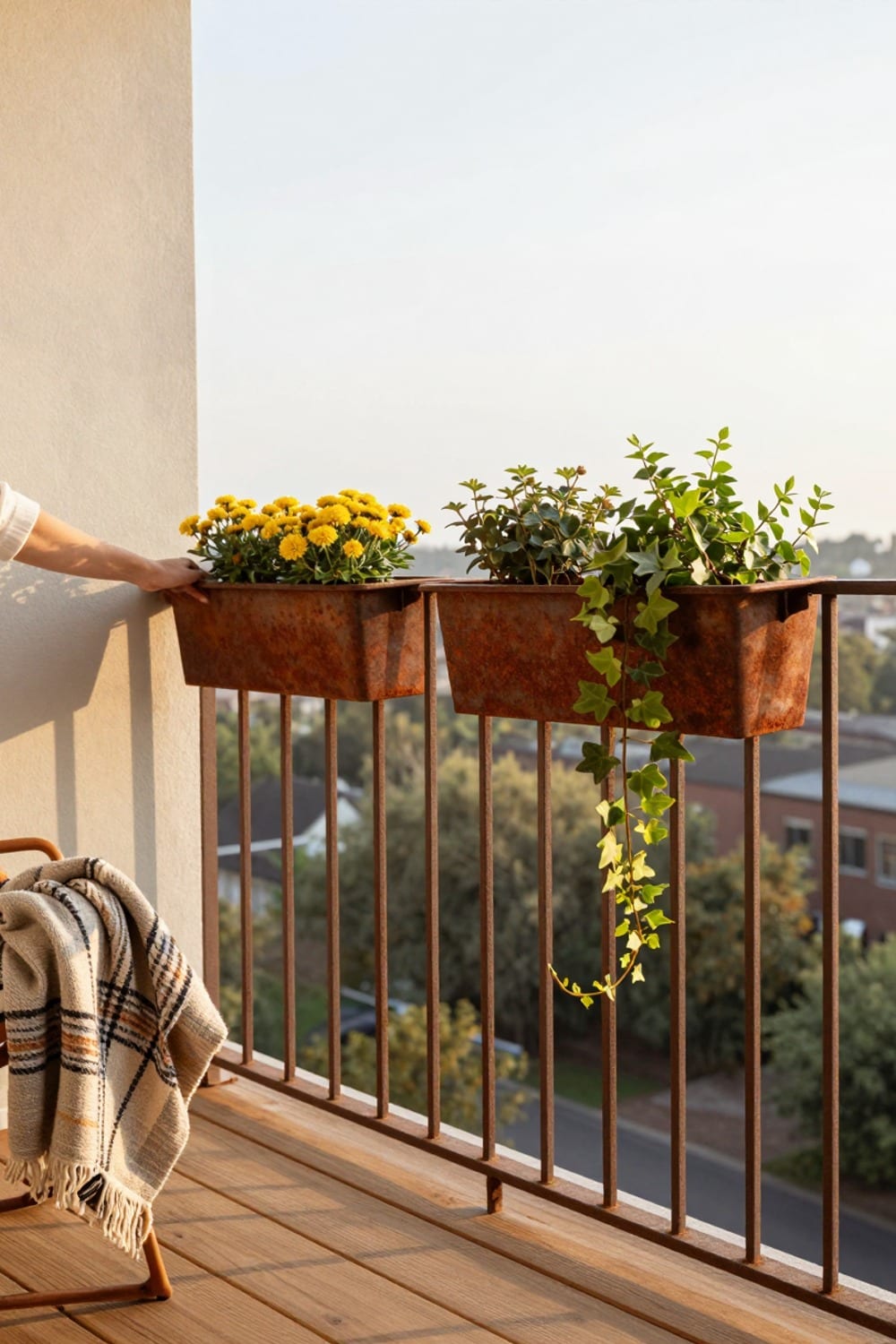
A railing lined with mums shouldn't cost you your security deposit — and it doesn't have to. Adjustable, no-drill planter boxes clip right onto the rail, hold real soil (not a sad plastic liner), and come off clean the day you move. This is the exact combo and setup that gets a rented balcony looking like the cover of a fall catalog by the first week of October.
The whole thing runs cheaper than most people expect — three no-drill boxes, soil, and a full set of plants typically lands between $60 and $110, depending on how many railing feet you're covering and whether you go with nursery mums or a mail-order kale. That's less than a single throw pillow at some retailers, and it's the change that actually gets photographed.
The winning fall combo (steal this formula)
You don't need ten different plants — you need four that do different jobs. This is the formula behind almost every gorgeous fall railing you've saved on Pinterest.
- Rust or mustard mums — the centerpiece. One per box, planted slightly off-center so it doesn't look like a soldier row.
- Ornamental kale — the textural anchor. Its ruffled purple-and-cream leaves actually get prettier as it gets colder.
- Purple fountain grass — the movement. One tall blade cluster at the back of the box catches wind and light all day.
- Trailing ivy or sweet potato vine — the softness. Let it spill over the box edge so nothing looks boxy or new.
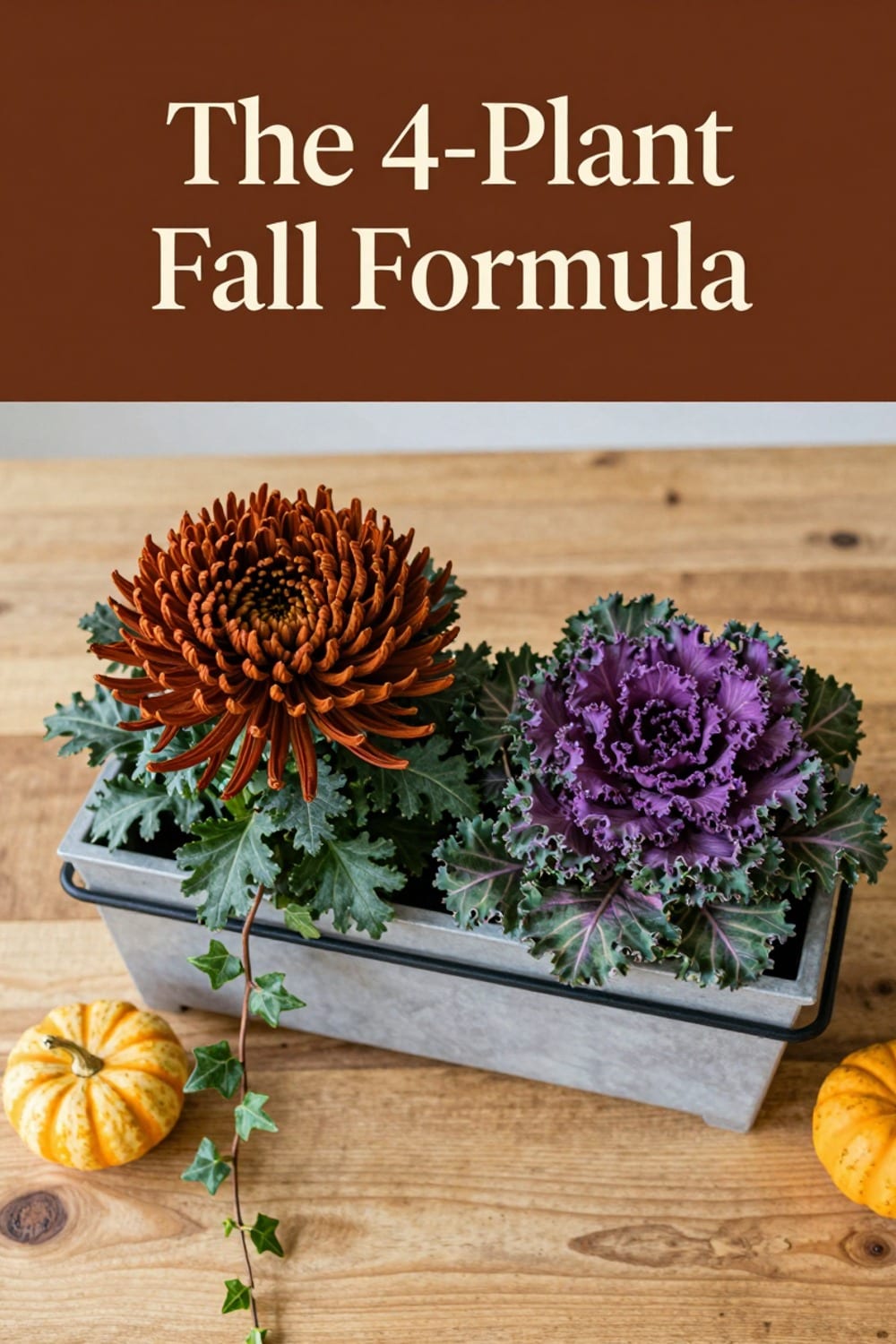
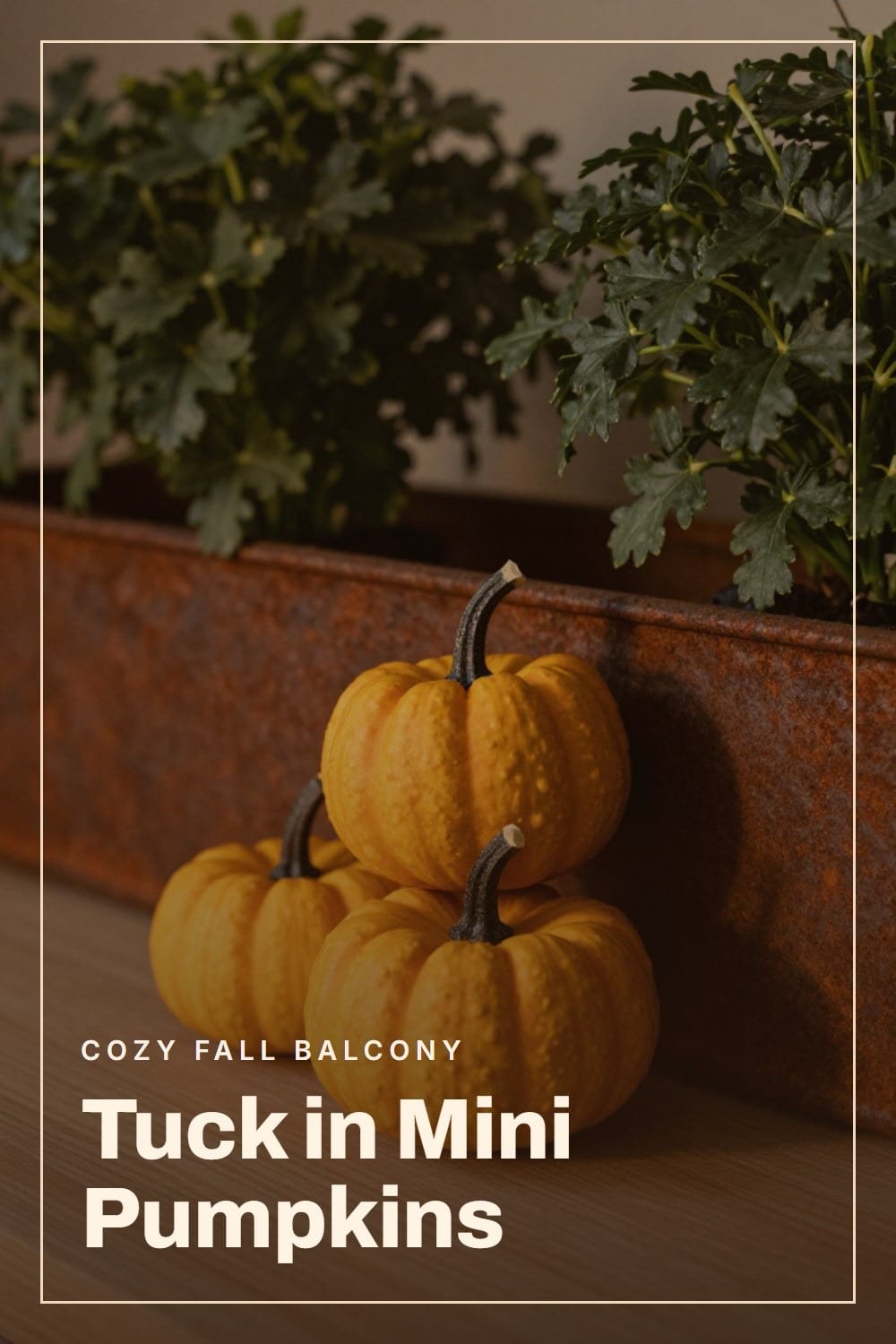
Tuck two or three mini pumpkins at the base of each box, resting against the planter rim. They hide the visible soil line and add the one detail that makes people stop scrolling.
Want to shift the palette without changing the formula? Swap rust mums for deep burgundy or bronze ones and the same four-plant structure reads more "jewel-tone autumn" than "pumpkin patch." Keep the kale and grass as-is — they're neutral enough to sit under either mood, which is exactly why this combo repeats itself all over Pinterest boards with completely different color stories.
Why this is different from a patio planter
A railing planter has three problems a floor pot doesn't: it hangs off a ledge, it can't drip on the balcony below you, and most leases explicitly ban drilling into the railing to mount it. The good news — modern no-drill railing boxes solve all three, and they're honestly easier to install than a floor pot.
There's also a real cost difference. A pair of large floor planters big enough to anchor a small balcony can run $40–$80 each once you account for the pot, the soil volume, and the plants to fill it. A trio of railing boxes covers roughly the same visual real estate — the whole rail line at eye level — for less material and less soil, because you're planting a shallow, wide box instead of a deep round one.
If you're just starting your fall setup, our cozy fall balcony ideas guide is the best starting point for the whole look, and this budget breakdown shows exactly what a full railing + tablescape costs when you shop smart.
Which bracket fits your railing type
Not every railing is the same shape, and the bracket is where a no-drill box succeeds or fails. Check which one describes yours before you order anything.
- Flat-top wood or composite rail — the easiest case. Almost any adjustable screw-clamp box fits, since the bracket just tightens against two flat, parallel faces.
- Round or tube-style metal rail — look for a box specifically listed as fitting round rails; the clamp shape is different and a flat-rail bracket will rock loose.
- Wrought iron with vertical bars — measure the gap between bars, not just the top rail width, since some boxes need a certain amount of clear rail to seat the bracket without hitting a baluster.
- Glass or cable railing — this is the one case where a standard clamp box usually won't work safely. Look for a box designed for glass-top rails, or skip the railing box here and use floor planters instead.
When in doubt, a quick photo of your railing's cross-section sent to the seller before you order saves a return. Ten minutes of checking beats a box that shows up and doesn't seat properly on install day.
How to set up no-drill fall railing planters
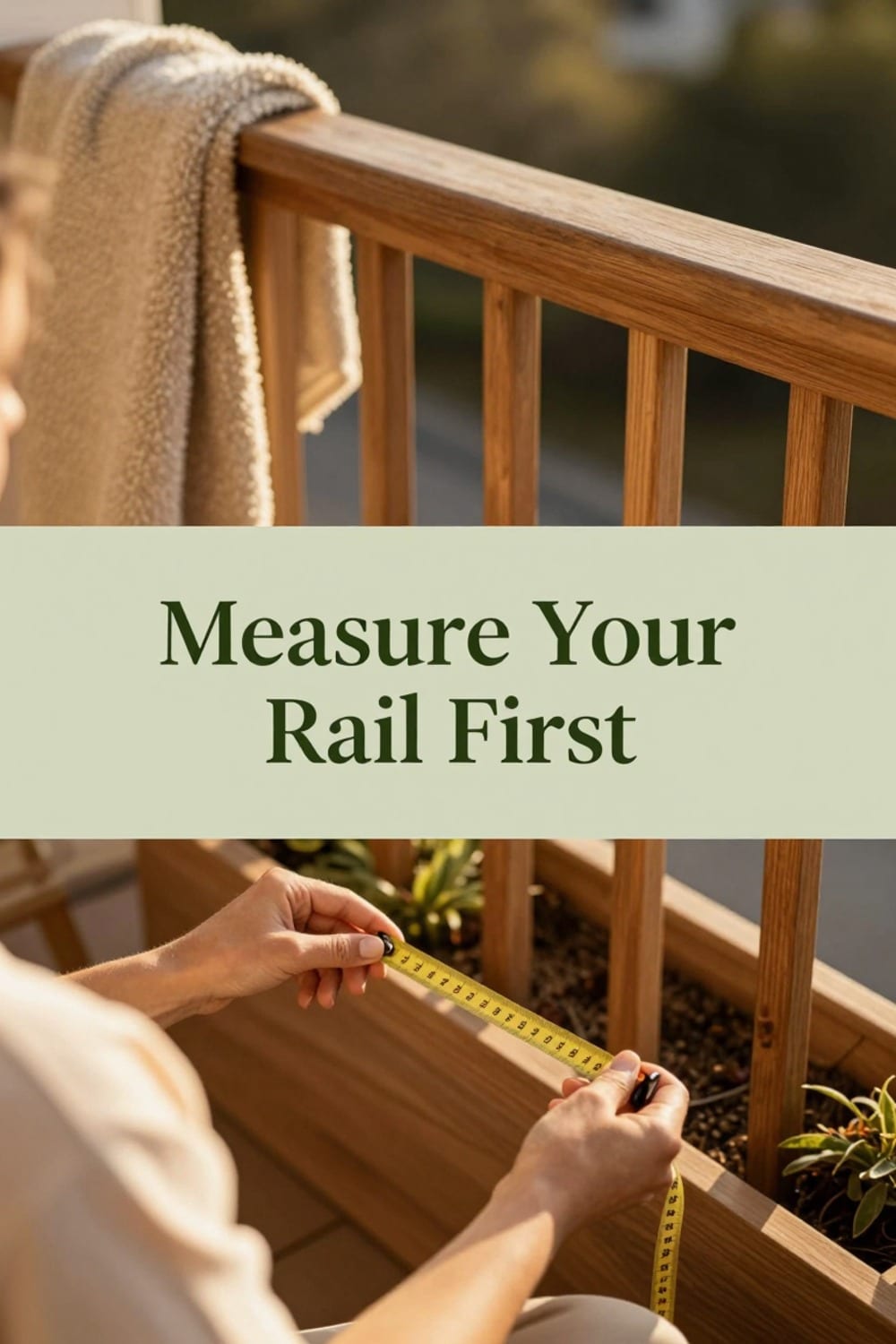
Measure your railing before you shop
Choose lightweight resin over terracotta
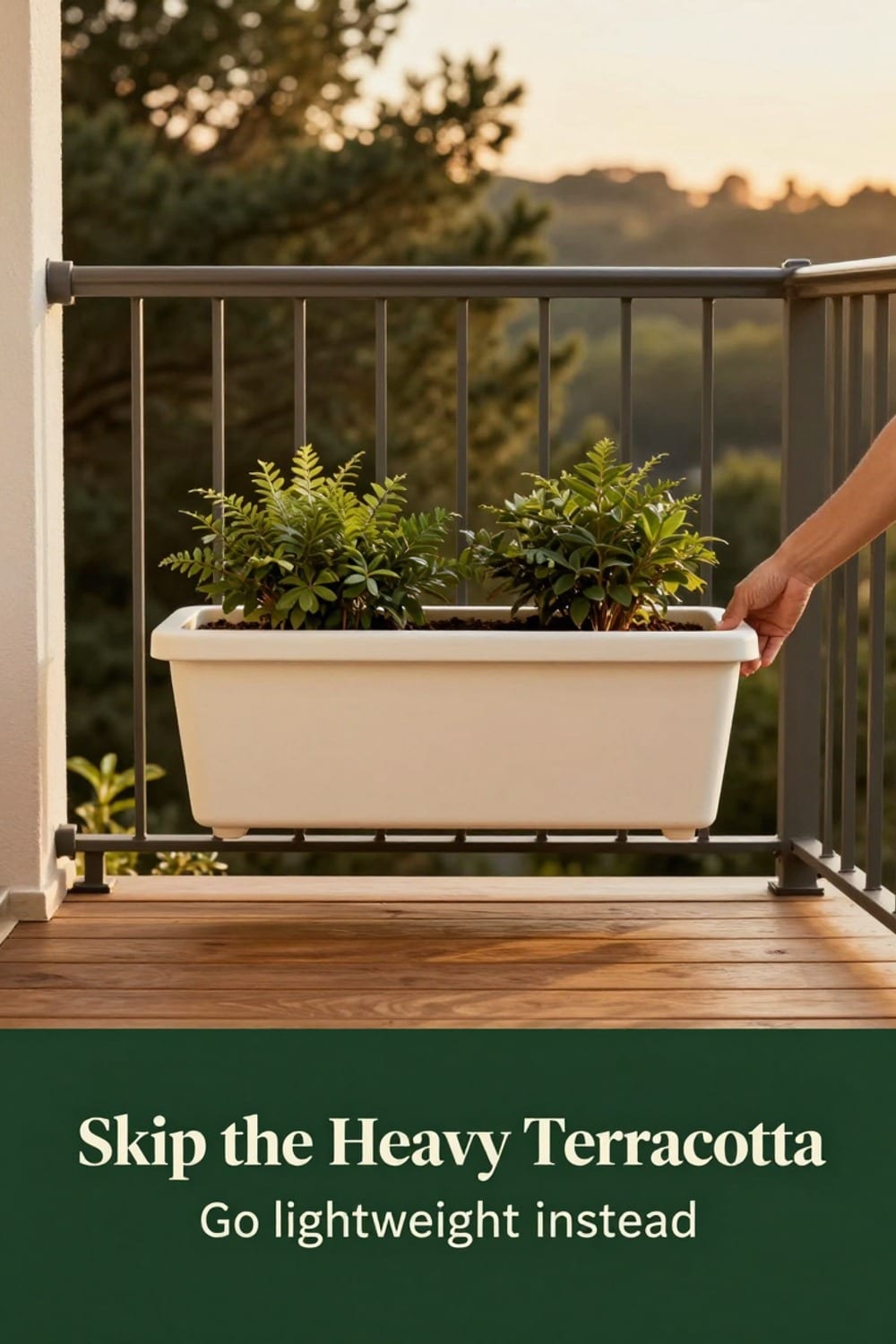
Check your lease's weight limit
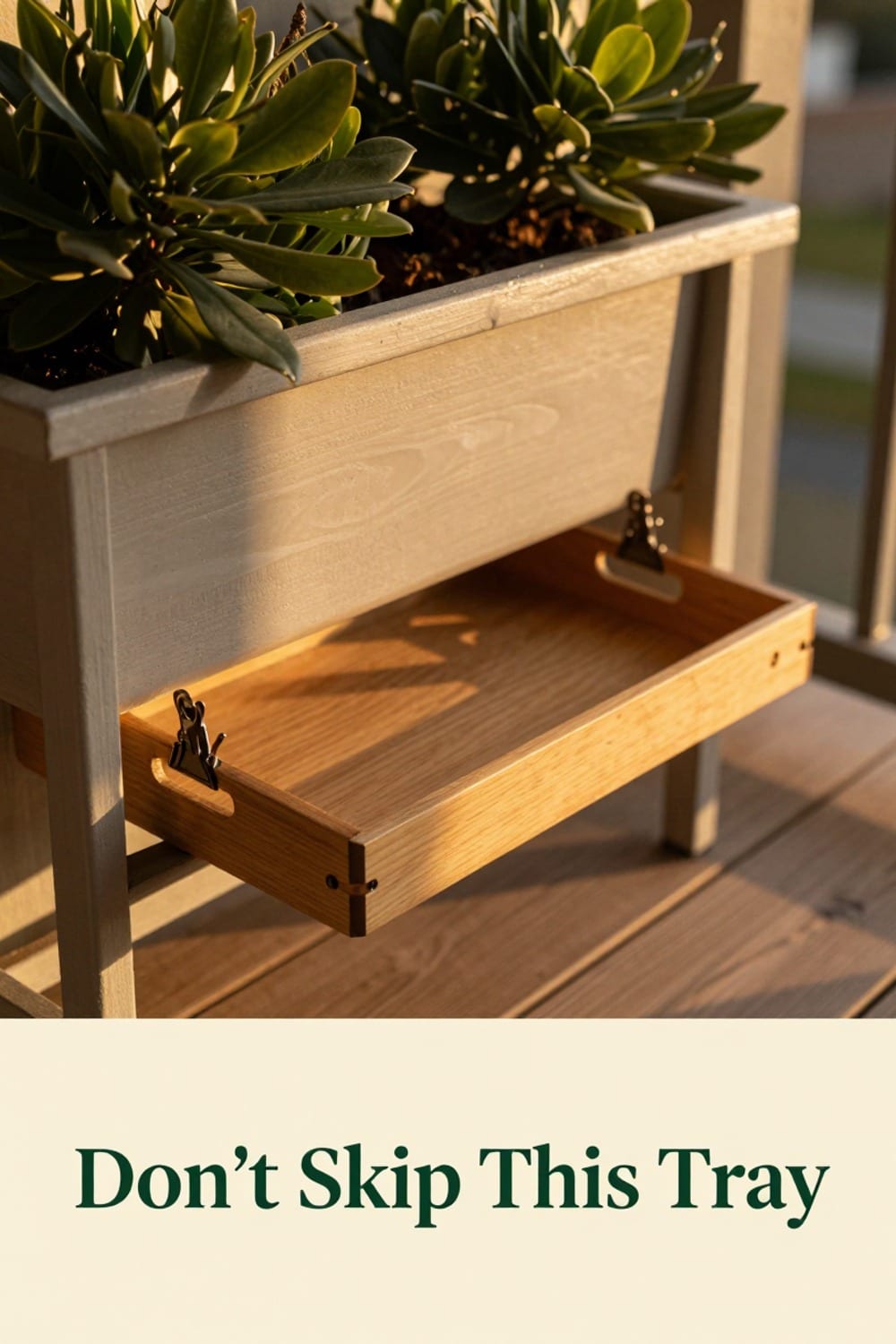
Install a drainage tray under every box
Sun-map your railing before you plant
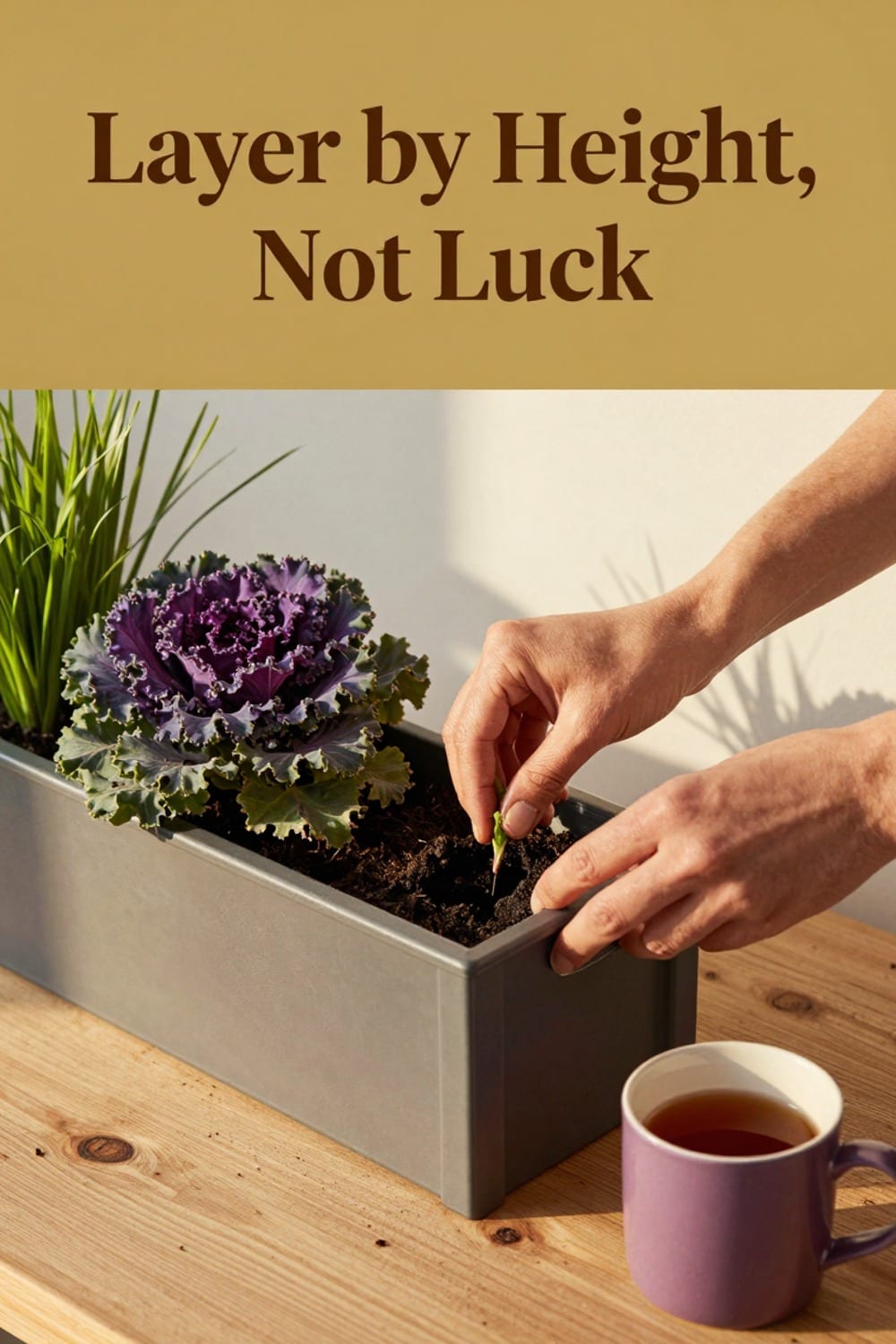
Plant the formula, layered by height
Water on a fall schedule, not a summer one
Swap what fades, keep what holds
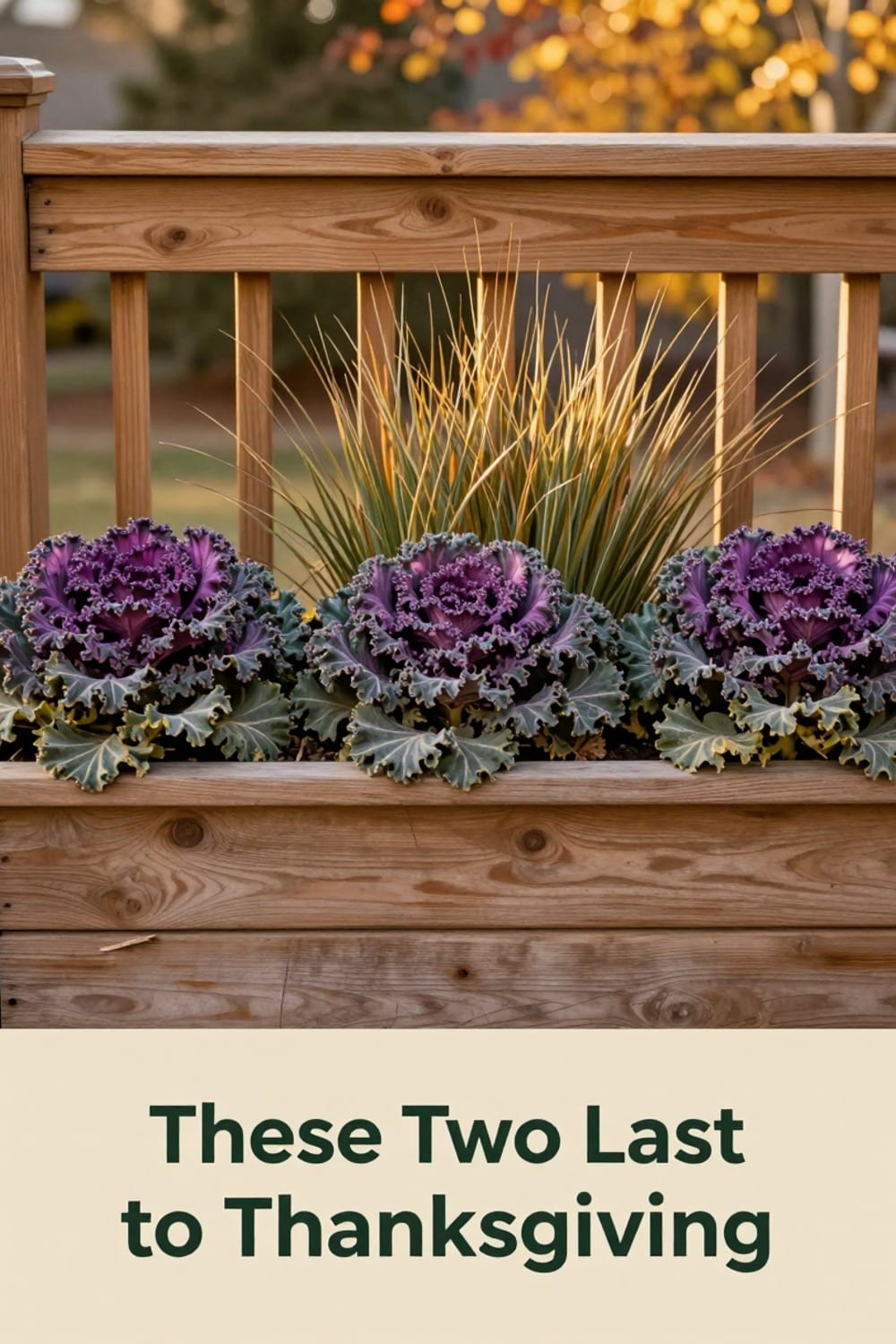
What actually lasts to Thanksgiving
Ornamental kale and purple fountain grass are the real workhorses here — both tolerate light frost and often deepen in color as temperatures drop. Mums are the shorter-lived showpiece, so plan to refresh them once, usually in mid-to-late November, rather than expecting one planting to carry the whole season.
How many boxes for your actual railing length
Most standard railing boxes run about 24–36 inches long, which makes the math simple once you have your measurement from step one. A typical Juliet or narrow apartment balcony (roughly 4–6 feet of usable rail) fits two to three boxes comfortably, with a little breathing room at each end so nothing looks jammed in.
On a longer rail — 8 feet or more — resist the urge to fill every inch. Three or four boxes with visible gaps between them photographs better and reads less like a hedge than the same number crammed edge to edge. A short run of two boxes on either side of a small bistro table, rather than one continuous line, is another layout that reads intentional rather than default.
If your balcony is narrow enough that a table and chairs already eat most of the floor space, railing planters do double duty: they're often the only greenery a small balcony has room for, which is part of why they're worth getting right. Our renter fall balcony makeover guide walks through fitting furniture and planters into the same tight footprint.
Pair it with the rest of your renter-safe setup
If you're renting and want the full no-holes system for the rest of your balcony (not just the railing), our renter fall balcony makeover guide covers flooring, seating, and lighting the same way — nothing that leaves a mark. Once the planters are in, warm light after dark is what makes the whole setup feel finished after sunset — our fall balcony lighting guide covers the no-outlet options that pair well with a planted railing.
The short list that makes this whole setup work — no drilling, no dripping on your downstairs neighbor, no heavy terracotta to haul upstairs.
| Product | Best for | Why we like it |
|---|---|---|
| Adjustable no-drill railing planter box Clamps on with a screw bracket instead of hardware, so it comes off clean at move-out and fits most standard rail widths. | Railings 3.5–5.5 inches wide, apartment and condo balconies | Clamps on with a screw bracket instead of hardware, so it comes off clean at move-out and fits most standard rail widths. |
| Lightweight fiberstone railing planter Holds the same soil volume as terracotta at a fraction of the weight, and won't crack in a sudden cold snap. | Renters worried about lease weight limits | Holds the same soil volume as terracotta at a fraction of the weight, and won't crack in a sudden cold snap. |
| Planter drainage tray / drip saucer Catches runoff before it becomes your neighbor's problem — the single most overlooked renter-courtesy item on this list. | Any unit with a balcony below yours | Catches runoff before it becomes your neighbor's problem — the single most overlooked renter-courtesy item on this list. |
| All-purpose potting mix (outdoor container) A mix formulated for containers drains faster than garden soil, which matters even more in a box that can't spread runoff sideways. | Filling railing boxes and floor pots alike | A mix formulated for containers drains faster than garden soil, which matters even more in a box that can't spread runoff sideways. |
| Trailing ivy or sweet potato vine plant picks The one plant in the formula that keeps growing through fall, so the box looks fuller every week instead of fading. | Softening the hard edge of a new railing box | The one plant in the formula that keeps growing through fall, so the box looks fuller every week instead of fading. |
FAQ
Frequently asked questions
Will railing planters damage my balcony or void my lease?
How much weight can a standard balcony railing hold?
Do I need a drainage tray if it doesn't rain much where I live?
How long do mums actually last in a railing planter?
What's the single biggest mistake with fall railing planters?
Will a no-drill box work on a glass or cable railing?
Filed under
Maeve Sinclair
Founder & Editor
Maeve is a renter-turned-balcony-obsessive in Asheville who spent years making tiny outdoor spaces feel like boutique escapes — no drilling, no big budget. She started Amber Nook to share the exact, doable formulas.
Amber Nook is a participant in the Amazon Services LLC Associates Program, an affiliate advertising program designed to provide a means for sites to earn advertising fees by advertising and linking to Amazon.com. As an Amazon Associate we earn from qualifying purchases. This means if you click a link and buy something, we may receive a small commission at no additional cost to you. We only recommend products we genuinely believe are useful.
keep reading
You might also love
15 renter-safe ways to turn a small apartment balcony into a warm, blanket-weather retreat this fall — no drilling, no deposit risk.
Renter-Friendly Fall Balcony Makeover: A Real Before & AfterA bare concrete rental balcony becomes a cozy fall corner in one weekend — no drilling, deposit safe, under $180.
Fall Balcony Ideas for Cold Climates (Windproof & Warm)Windproof screens, a heater that's actually safe in a tight footprint, and plants that shrug off a hard frost — the fall balcony playbook for high-rise and northern homes.