Faux Hedge Balcony Screens That Survive Wind
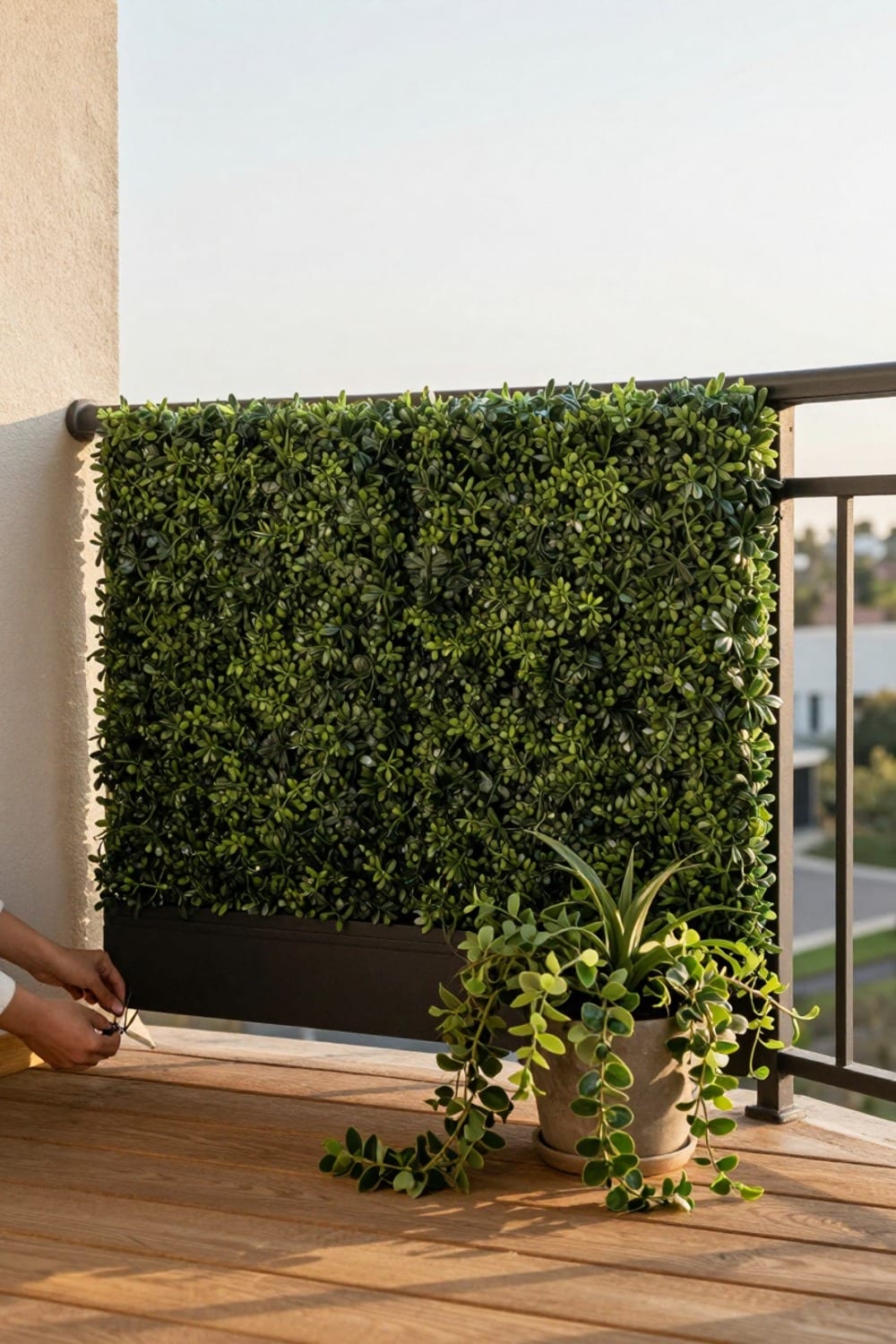
Interlocking faux boxwood panels give a rented balcony year-round privacy with zero watering and zero drilling — if you attach them so wind can't take them out. Here's how to hang it, wind-proof it, and keep it from looking like the cheap version.

This post contains affiliate links. As an Amazon Associate we earn from qualifying purchases — at no extra cost to you.
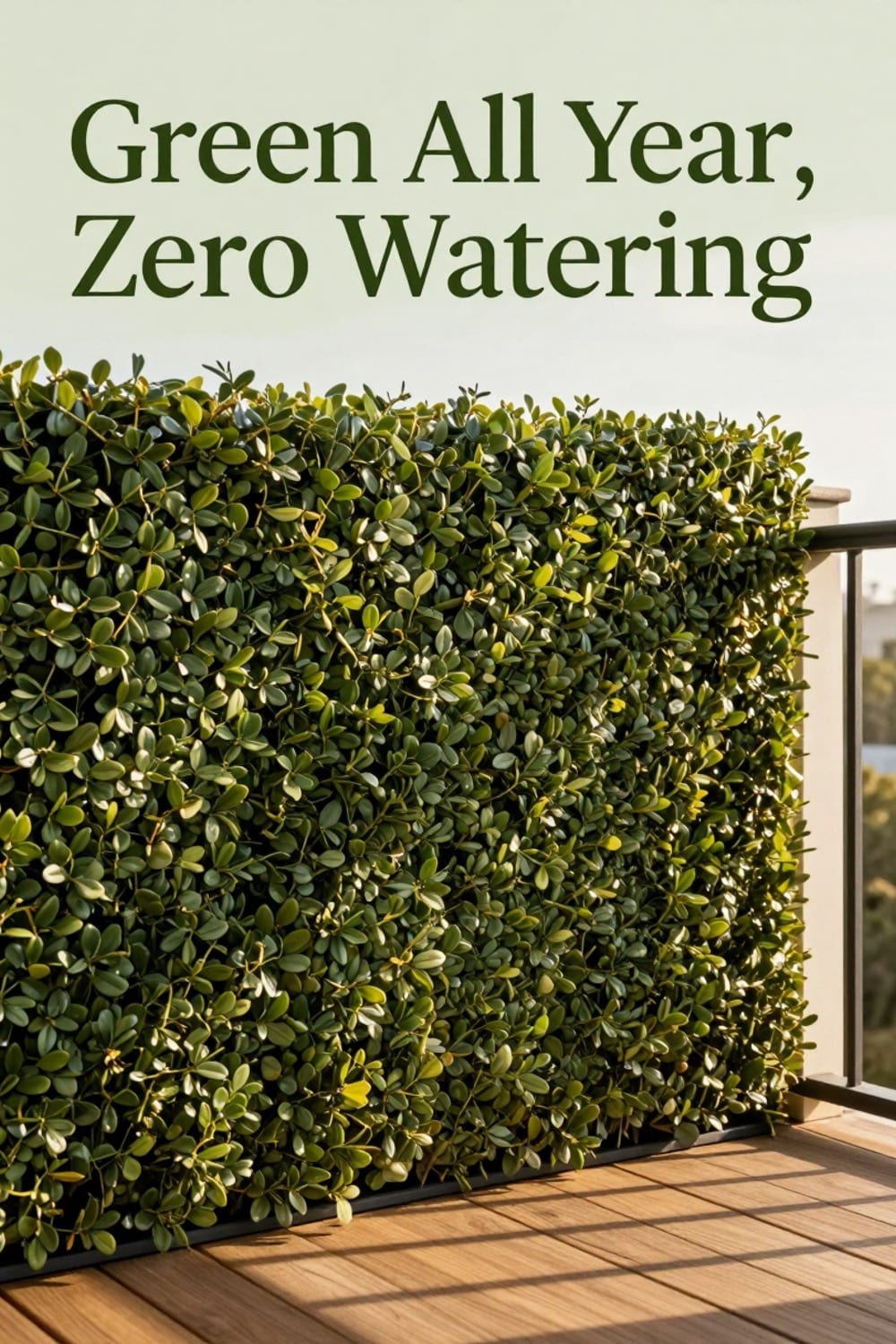
A faux hedge is the one balcony privacy fix you don't have to think about twice a year. Real plants need a vacation-watering favor and a plan for the first frost; a good faux hedge panel just stays green, through July heat and a February freeze, without you doing a single thing to keep it that way.
The trouble is most people picture the flimsy plastic ivy roll from the hardware store end-cap and stop there. Modern interlocking boxwood panels are a different category entirely — dense, UV-stabilized, and convincing enough that people ask if it's a real hedge. Here's the honest version: how to attach it with zero drilling, how to keep wind from ripping it off the railing, and how to keep it from reading as the rental fix it technically is.
Why faux hedge is the privacy fix with no off-season
A real hedge in a container is a lovely idea for about four months. Then it's a dormant stick-bush all winter, or a stressed, patchy thing by August if you missed two waterings in a heat wave. A faux hedge panel skips that entire cycle — it looks the same in January as it does in June, which matters more than it sounds like it should when the whole point is a screen you can actually count on.
The panels worth buying are interlocking artificial boxwood squares that click together edge to edge, built from UV-stabilized plastic rated to hold their color for roughly five years or more of full outdoor sun. That UV rating is the detail that separates a panel that still looks green in year three from one that's gone straw-yellow on the sun-facing side by August of year one — it's worth checking before anything else.
How to hang it with zero drilling — and keep your deposit
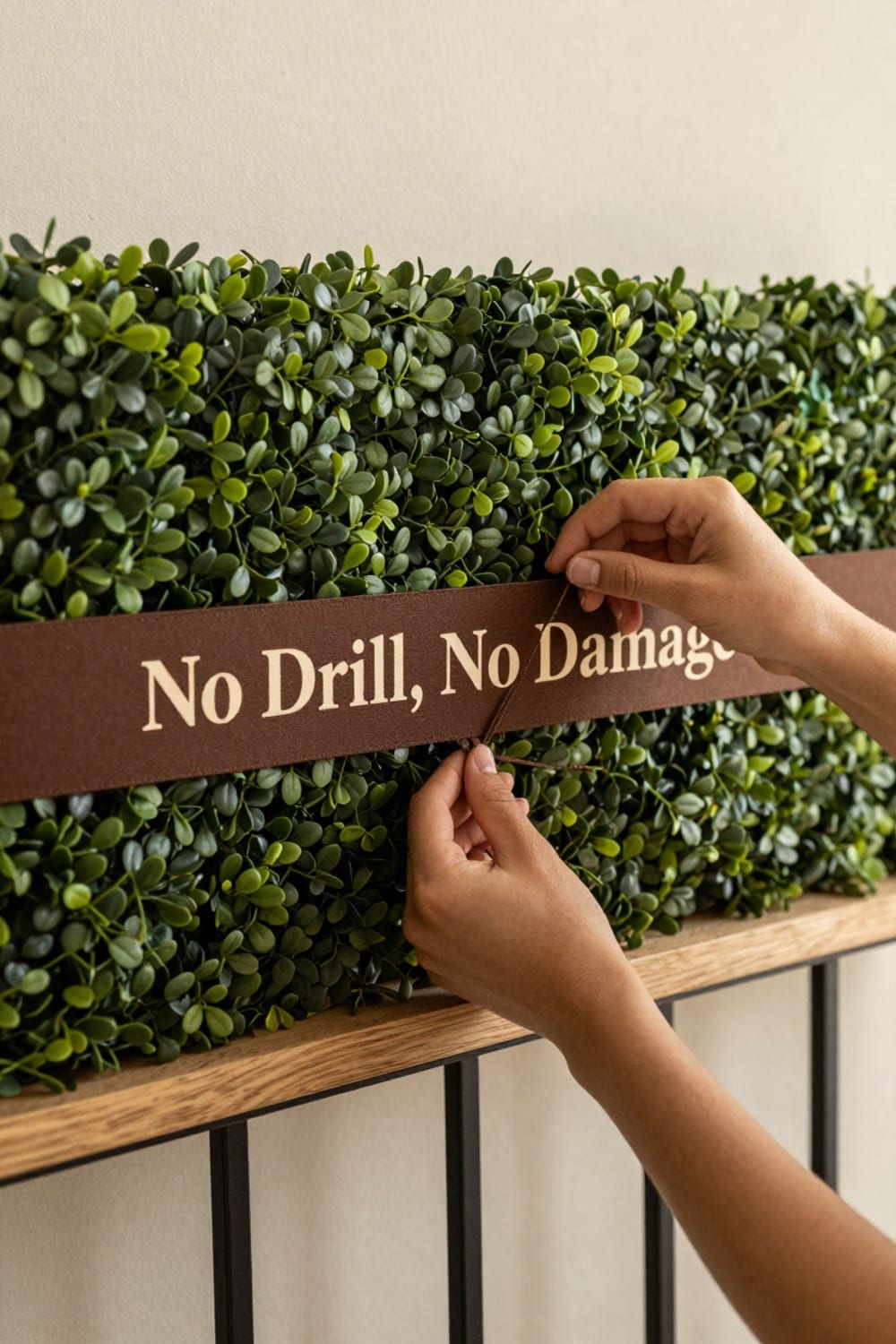
Every panel in this guide attaches the same renter-safe way: no screws, no anchors, nothing that leaves a hole in a railing you don't own. The two methods that actually hold up are heavy-duty UV-resistant zip ties and outdoor railing clips, and the trick that makes either one disappear visually is color-matching.
- Heavy-duty UV-resistant zip ties — thread through the panel's backing grid and around the railing bar; choose black or dark green so they blend into the hedge backing instead of standing out as hardware.
- Outdoor railing clips — a squeeze-and-release clip that grips the rail without tools, good for panels you'll want to reposition or remove more than once a season.
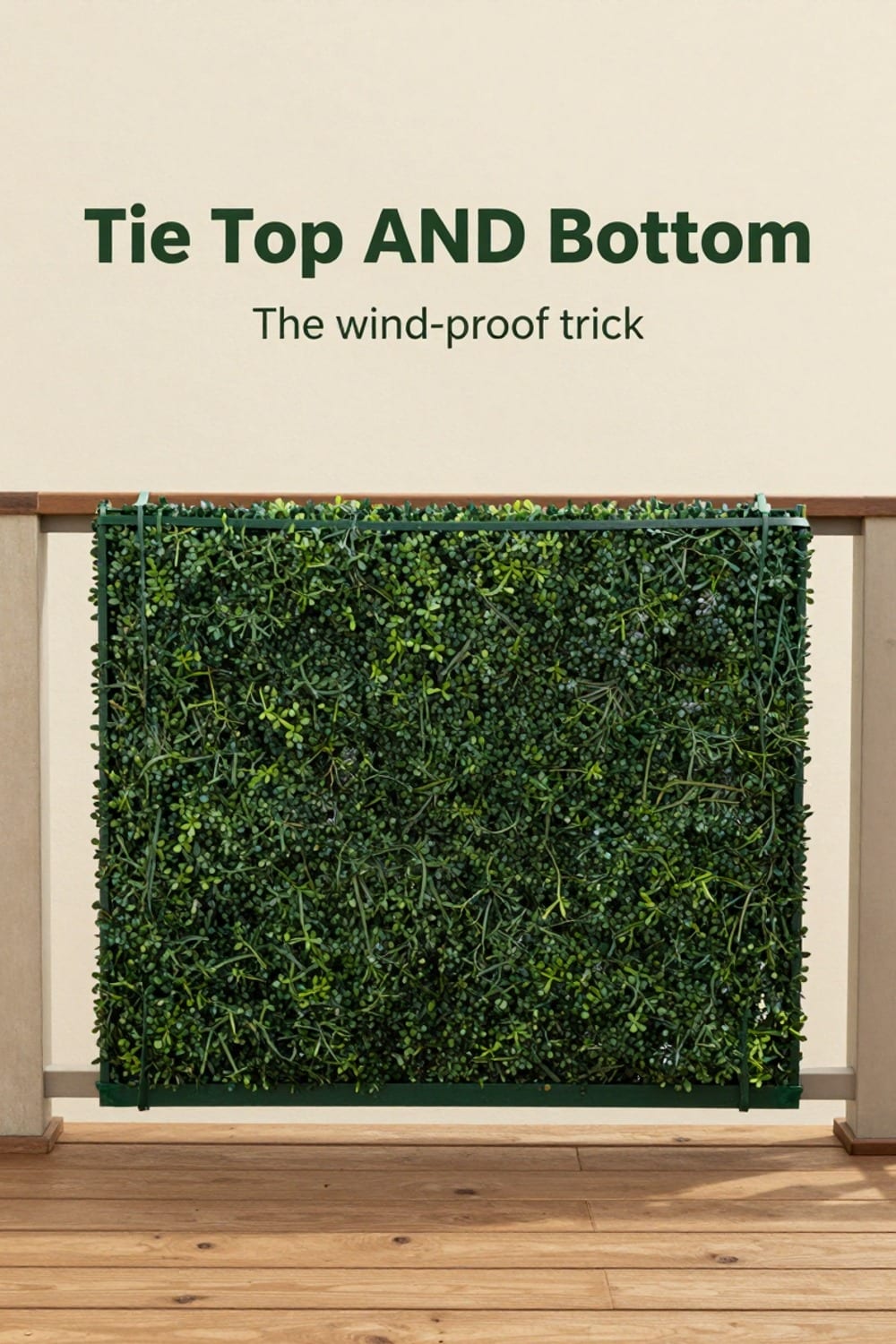
- Tie top and bottom, not just the top — a panel anchored only at the top rail swings and flaps the moment wind hits it, which is the single most common reason these come loose.
- Space ties every 12–16 inches along each rail — a panel held every foot stays flat against the railing; one held only at the corners bows outward and catches wind like a scoop.
The wind problem nobody mentions until it happens
A solid hedge panel is, structurally, a sail. That's the part the product photos never show you. A flat, fully solid surface catches wind the same way a boat sail does, and on an exposed balcony — especially anything above the third or fourth floor — a panel secured only loosely at the top will eventually pull its ties through the backing or peel off the rail entirely.
The fix isn't more tape, it's better spacing and knowing when to choose a panel that lets some air through instead of blocking all of it. A fully solid interlocking boxwood panel is the most private option, but a panel with a slightly more open weave, or one paired with a semi-permeable reed screen on the windiest section only, sheds gusts instead of fighting them.
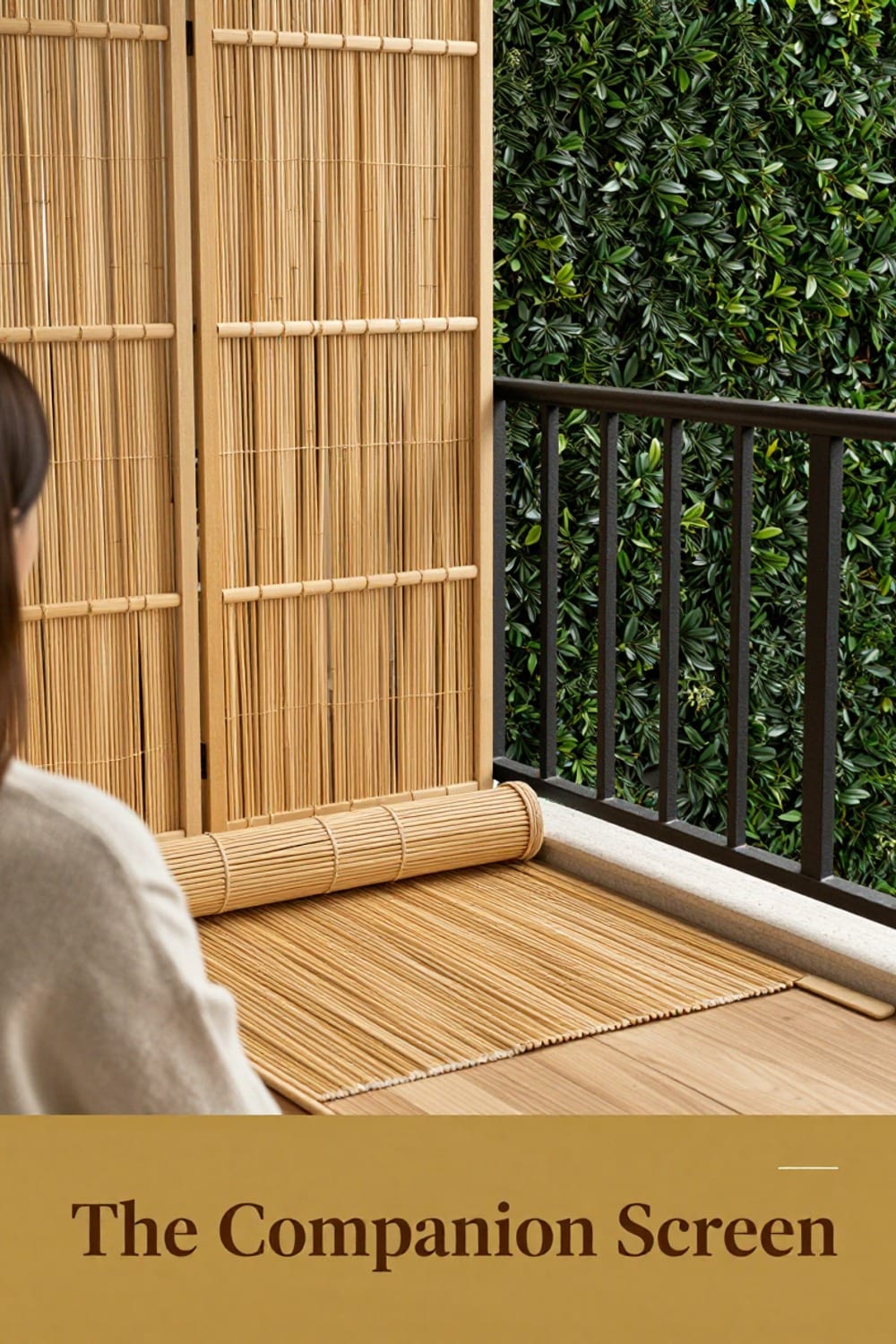
Bamboo and reed rolls make a great companion screen
A bamboo or reed roll screen is worth pairing with a faux hedge panel rather than choosing one or the other. Unroll it along the section of railing that takes the worst wind or the most direct sightline from a neighboring balcony, and attach it the same no-drill way — heavy-duty zip ties or outdoor clips work on reed the same as they do on hedge backing.
Reed and bamboo also solve the removal problem better than almost anything else on this list: a pair of scissors through the ties and the whole roll comes down in under a minute, with nothing left behind on the railing. That makes it the right choice for the one wall you're least sure you'll want to keep dressed the same way next season.
How to keep it from looking like the cheap version
Here's the honest part: a single flat hedge panel bolted straight against a railing, with the backing grid visible at the edges and nothing else going on, reads as exactly what it is — a rental fix. The panels that photograph like an actual hedge almost always have one thing in common: they're layered with something real.
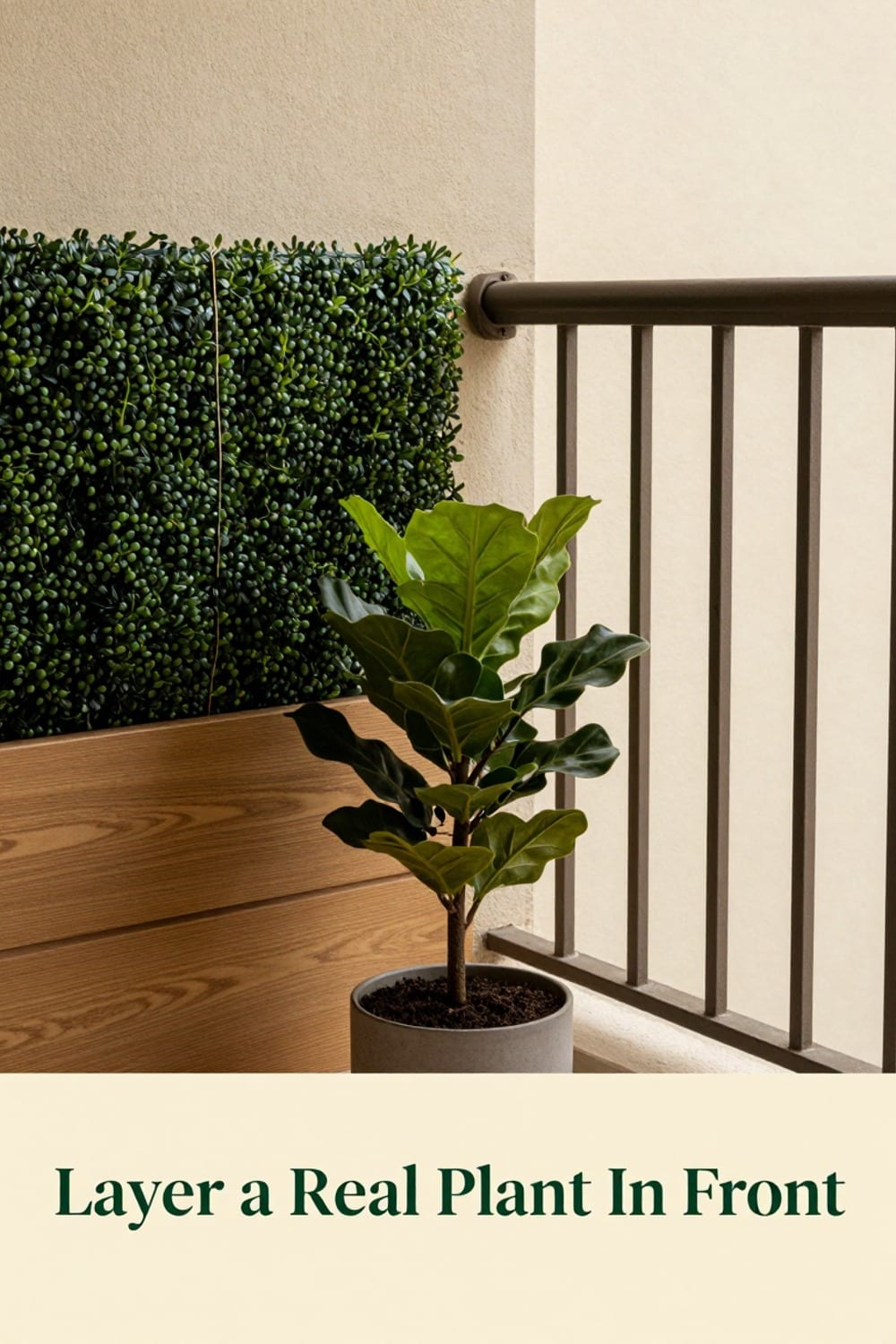
- Layer a real trailing plant in front — a potted pothos, ivy, or trailing succulent in front of the seam blurs the line between fake and real far better than the panel alone.
- Mix textures instead of one flat surface — pair the dense boxwood panel with a reed section or an expandable trellis so the eye reads depth instead of one uniform sheet.
- Hide the backing grid — trim overhanging panel edges so the plastic mesh backing never peeks out past the leaves, especially along the top rail where it's most visible from inside.
- Break up the repeat — identical square panels lined up edge to edge with the leaf pattern all facing the same way is the fastest way to look mass-produced; rotate a panel or two 90 degrees so the pattern doesn't visibly repeat.
The panels that end up looking expensive aren't necessarily the priciest ones — they're the ones treated as a backdrop for real greenery, not as the entire solution on their own.
Cleaning, fading, and what "5+ years" actually means
UV-stabilized doesn't mean UV-proof. It means the color loss happens on a much longer curve than a bargain-bin panel, not that it never happens. Expect the sun-facing side to look slightly duller than the shaded side after a couple of full summers — that's normal and part of what the multi-year rating already accounts for.
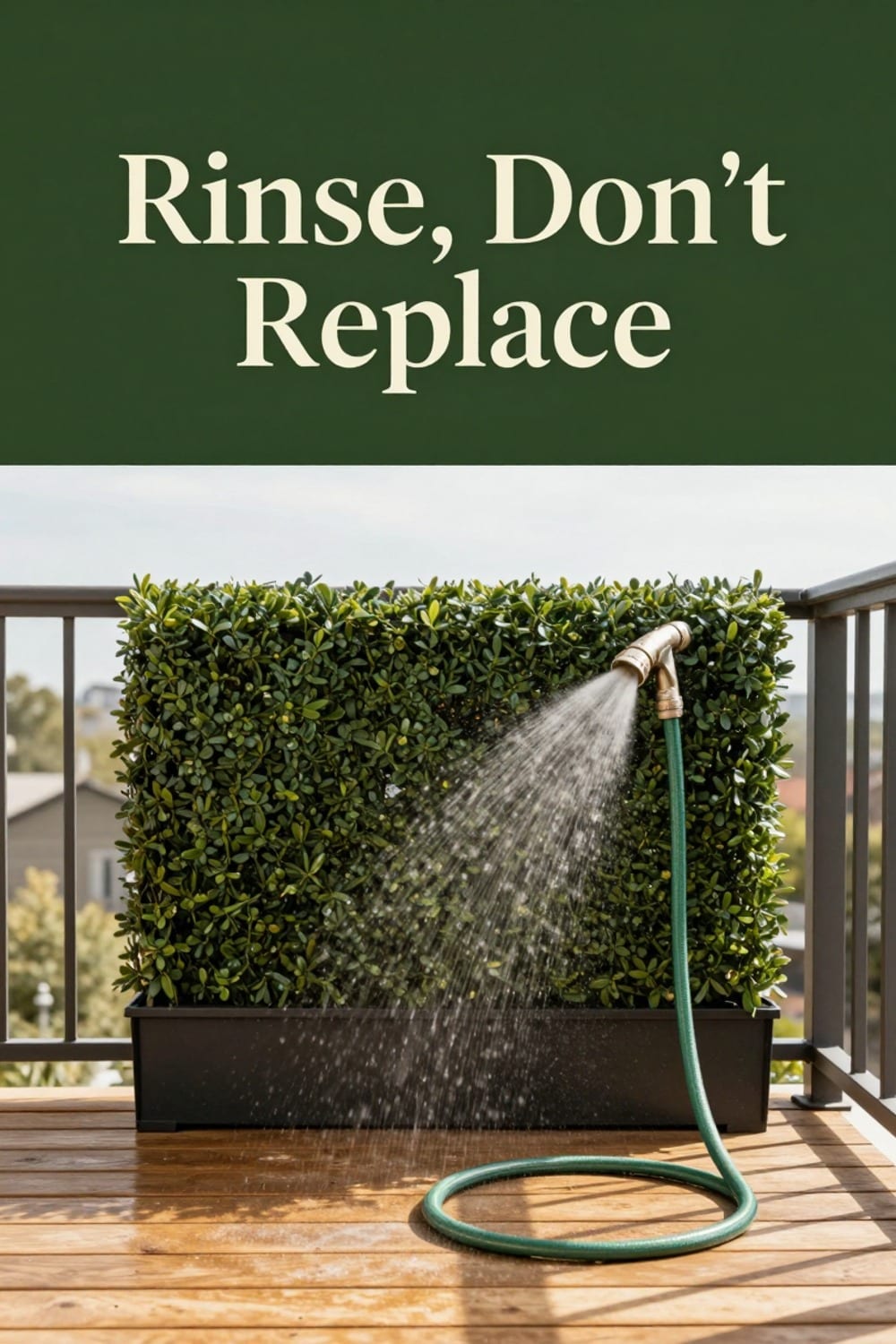
Maintenance is genuinely low: a garden hose rinse a few times a season clears dust and pollen, and a soft brush with mild soapy water handles anything stuck in the leaves after a windy week. Rotating panels top-to-bottom or side-to-side once a year evens out sun exposure so no single section fades faster than the rest, which stretches the realistic-looking years out further than leaving it in one fixed position.
Taking it down clean when you move out
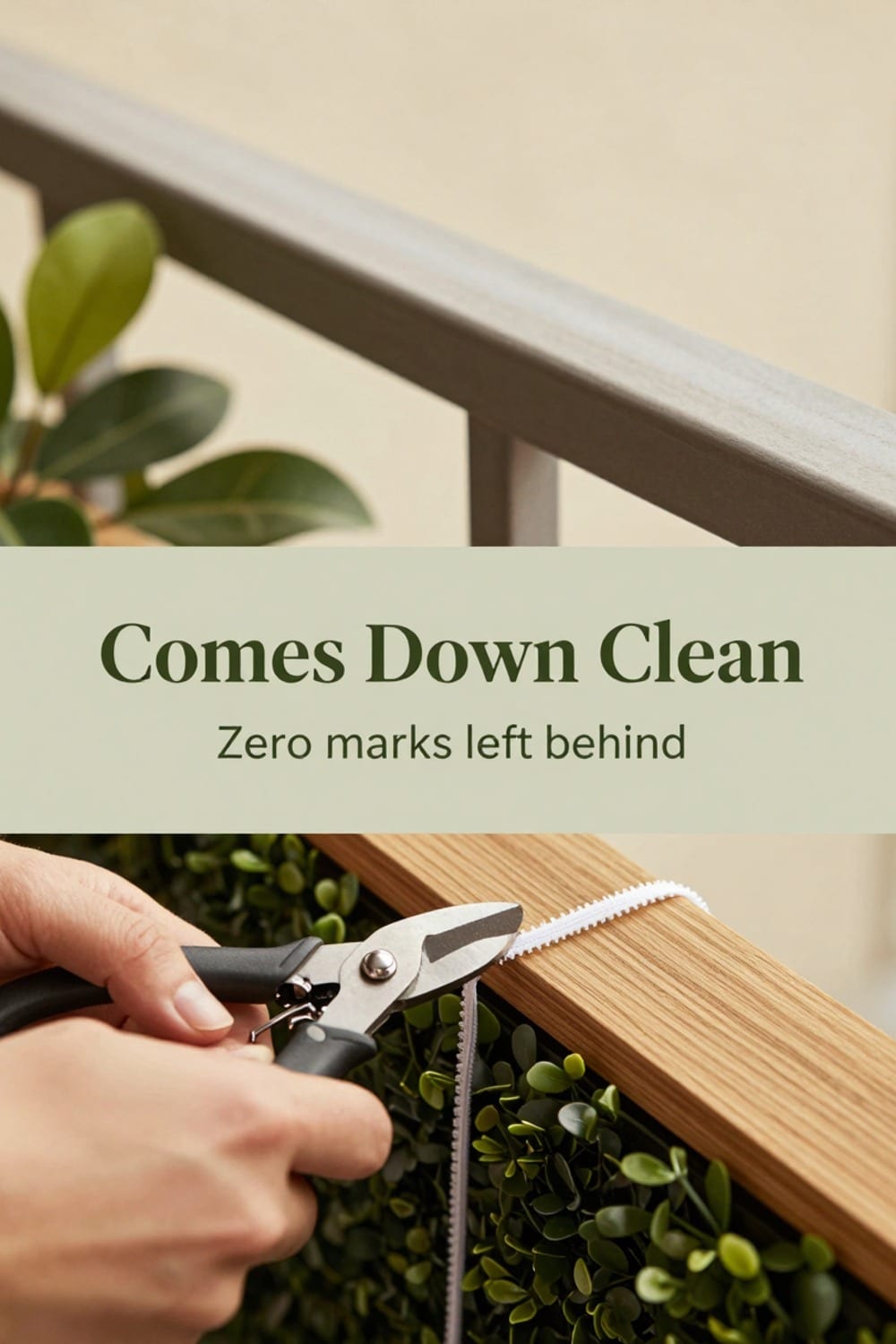
This is the whole reason the zip-tie-and-clip method matters more than it might seem. Snip each tie with a small pair of cutters, unclip anything on railing clips, and the railing underneath looks exactly like it did the day you moved in — no drilled holes, no adhesive residue, no patch job before the walk-through.
Do it in reverse order from how you hung it: bottom ties first so the panel doesn't sag and pull on the remaining top ties, then work your way up. Panels in good condition are worth keeping — a faux hedge that survived one apartment with its color and shape intact will do the same job at the next one.
For the full no-drill toolkit this fits into, start with our renter balcony privacy ideas guide. If you'd rather go with living greenery instead of — or alongside — a faux panel, balcony privacy plants covers what actually grows tall and full in a container. And if your balcony deals with real wind for more than just an occasional gust, our cold-climate fall balcony guide goes deeper into windbreaks that hold up on higher floors.
The short list that actually builds a wind-proof, good-looking faux hedge screen — no drilling, no ASINs guessed, no prices listed here.
| Product | Best for | Why we like it |
|---|---|---|
| Interlocking artificial boxwood hedge panels UV-stabilized panels click together edge to edge and hold their color for years, unlike thin plastic ivy rolls that fade in one season. | The main privacy layer along most of the railing | UV-stabilized panels click together edge to edge and hold their color for years, unlike thin plastic ivy rolls that fade in one season. |
| Bamboo or reed roll screen Unrolls in minutes, zip-ties on the same way as the hedge panel, and comes down clean with a pair of scissors if you change your mind. | The windiest section, or the wall you're least sure you'll keep long-term | Unrolls in minutes, zip-ties on the same way as the hedge panel, and comes down clean with a pair of scissors if you change your mind. |
| Heavy-duty UV-resistant zip ties Rated for outdoor UV exposure so they don't go brittle and snap after a summer, and dark colors blend into the panel backing instead of standing out. | Attaching any panel to a railing with zero drilling | Rated for outdoor UV exposure so they don't go brittle and snap after a summer, and dark colors blend into the panel backing instead of standing out. |
| Outdoor railing clips A squeeze-release clip holds as firmly as a zip tie without needing to be cut off every time you want to move or remove the screen. | Panels you want to reposition or pull down more than once a season | A squeeze-release clip holds as firmly as a zip tie without needing to be cut off every time you want to move or remove the screen. |
| Expandable trellis panel Folds out to fit an odd-width railing section and gives real trailing plants something to climb, which is exactly what breaks up a too-uniform hedge look. | Adding texture and depth so the hedge doesn't look like one flat sheet | Folds out to fit an odd-width railing section and gives real trailing plants something to climb, which is exactly what breaks up a too-uniform hedge look. |
FAQ
Frequently asked questions
Does a faux hedge balcony screen actually look real up close?
How long does a faux hedge panel actually last outside?
Will zip ties or railing clips damage my balcony or void my lease?
What actually stops wind from ripping a faux hedge panel off the railing?
Can I use a faux hedge screen on a high-rise or windy corner balcony?
Maeve Sinclair
Founder & Editor
Maeve is a renter-turned-balcony-obsessive in Asheville who spent years making tiny outdoor spaces feel like boutique escapes — no drilling, no big budget. She started Amber Nook to share the exact, doable formulas.
Amber Nook is a participant in the Amazon Services LLC Associates Program, an affiliate advertising program designed to provide a means for sites to earn advertising fees by advertising and linking to Amazon.com. As an Amazon Associate we earn from qualifying purchases. This means if you click a link and buy something, we may receive a small commission at no additional cost to you. We only recommend products we genuinely believe are useful.
keep reading
You might also love
The ranked list of what actually survives high-rise wind — slatted screens, tied-down mesh, and the ground-floor advice that quietly fails you by the eighth floor.
Cozy Fall Balcony Ideas for Apartments: 15 Ways to Warm Up a Small Space15 renter-safe ways to turn a small apartment balcony into a warm, blanket-weather retreat this fall — no drilling, no deposit risk.
Renter-Friendly Fall Balcony Makeover: A Real Before & AfterA bare concrete rental balcony becomes a cozy fall corner in one weekend — no drilling, deposit safe, under $180.