Bamboo Balcony Privacy Screens: Landlord-Safe, No-Drill, Actually Beautiful
Bamboo screening solves the one thing a solid privacy panel can't: it blocks the sightline while still letting air move through. Here's how to choose the right weave, size a roll to your actual railing, and hang it with nothing but zip ties — no drilling, no mold surprises, no lost deposit.
This post contains affiliate links. As an Amazon Associate we earn from qualifying purchases — at no extra cost to you.
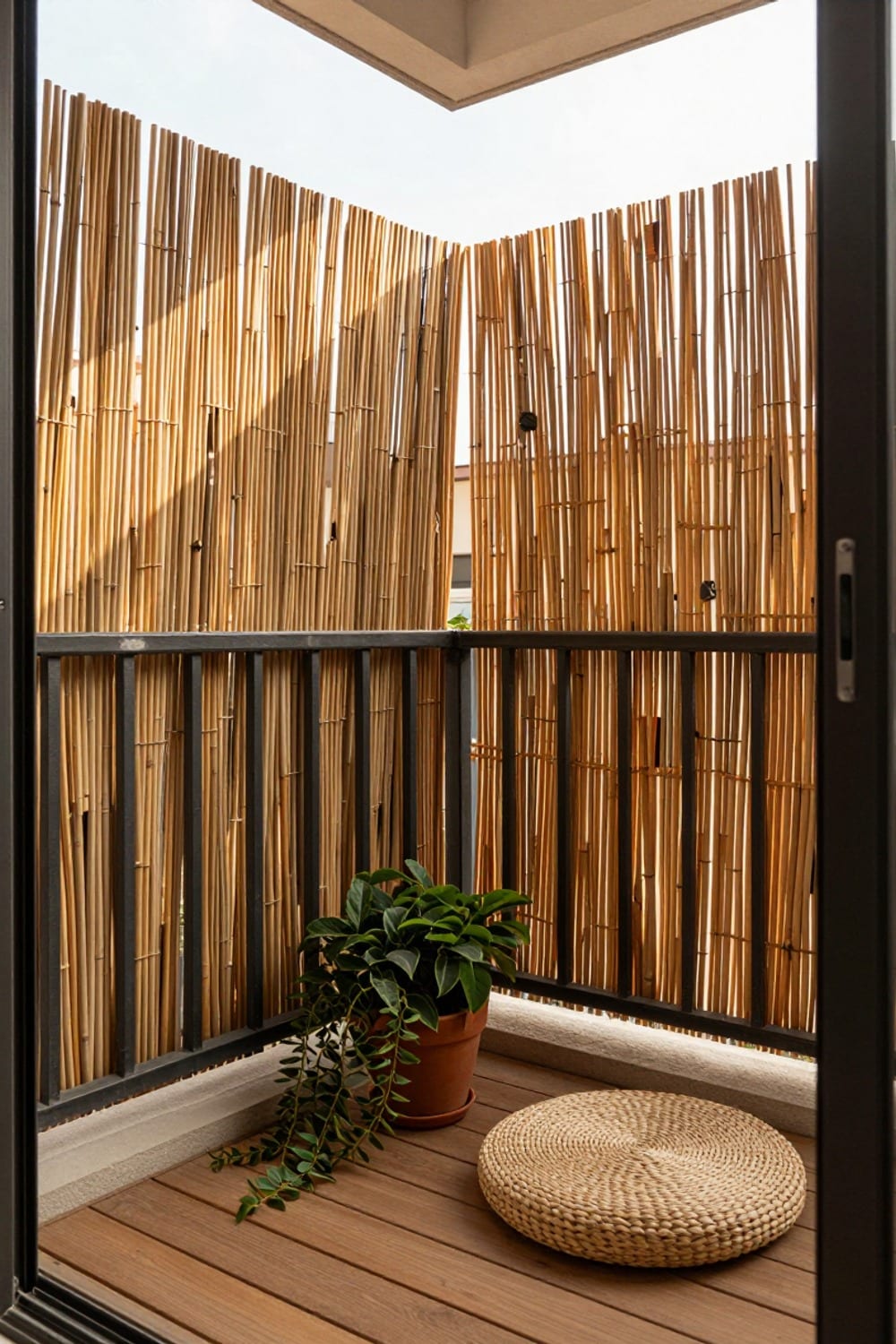
The bamboo roll from the hardware store end-cap has an image problem, and it's not really bamboo's fault. Hung wrong — sagging at the corners, wire ends fraying loose at the cut edge — it reads exactly like what people assume it is: a rental afterthought. Hung right, that same roll is the reason a balcony can feel like the quiet corner of a small resort instead of a slab of concrete with a view of someone else's kitchen window.
That's the whole difference this guide is about. Bamboo screening isn't a downgrade from a traditional privacy fence — it's one of the strongest tools in the renter balcony privacy toolkit, because it does something a solid panel can't: it blocks the sightline while still letting air move through. Here's how to pick the right weave, size a roll to your actual railing, install it in about twenty minutes with nothing but zip ties, and keep it looking like the resort version instead of the hardware-store version for years.
Why a Bamboo Roll Reads Resort, Not Rental
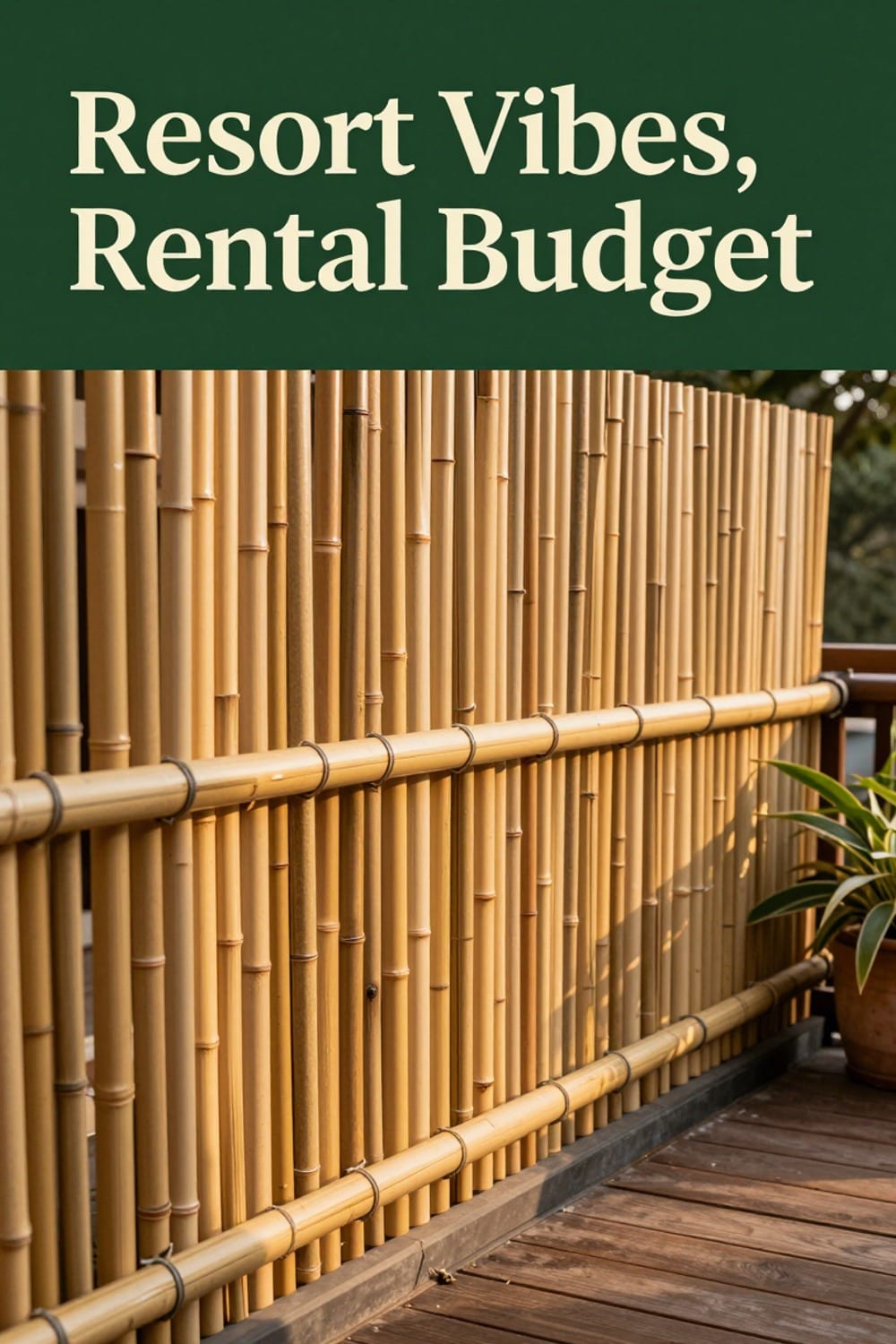
Vinyl lattice and the thin plastic privacy mesh sold next to it are the default because they're the first result in most searches, not because they look good. They're also the fastest way to make a balcony look like exactly what it is: a rented outdoor space with a cheap fix bolted to the railing. Bamboo works differently because it's a real, textured, slightly imperfect natural material, and imperfect is what reads as expensive on a balcony. No two canes are precisely the same width or tone, and that variation is what your eye reads as chosen, not as the cheapest option in stock.
The other reason it reads as resort rather than rental is warmth. A bamboo screen sits somewhere between honey and espresso depending on whether it's natural or carbonized, and both tones do something white vinyl or grey plastic trellis never can — they play well with wood decking, rattan furniture, and the warm string lights most small balconies already lean on. You're not fighting your own decor to make the screen look intentional. It already matches the mood you were going for.
There's also a practical reason bamboo suits an apartment balcony specifically: it doesn't need permission to look nice. A bamboo privacy fence built for an apartment balcony works with whatever railing is already there — black metal, white aluminum, unfinished wood — because the natural tone sits on top of all of them instead of clashing with one. That's a bigger deal on a rental than it sounds, since you didn't choose the railing and can't repaint it.
Bamboo vs. Reed vs. Willow: What You're Actually Choosing Between
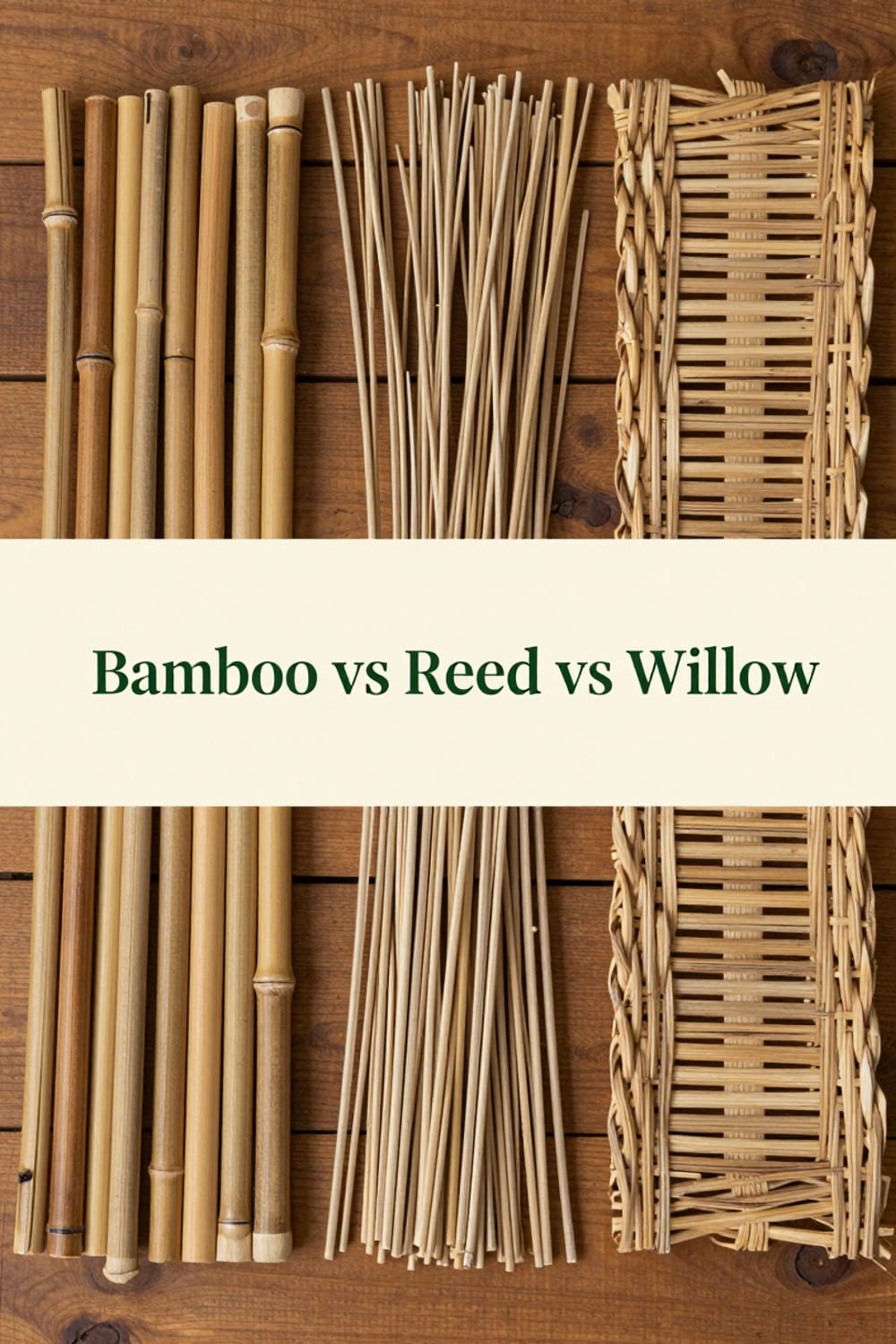
Garden centers and marketplace listings tend to lump these together under natural screening, but they behave differently once they're outside for a season, and picking the wrong one for your situation is the most common reason people end up disappointed by their first roll.
- Bamboo — whole round canes wired together tight and close. The most rigid of the three, the best at holding a flat plane against a railing without bowing, and the densest weave, meaning the least light and sightline bleed through the gaps. Not the cheapest option, but the closest to that resort texture.
- Reed — thinner individual stalks, usually a shade lighter and papery in feel. A reed fence along a balcony railing hangs lighter and gives a little more in wind, but the gaps between stalks let noticeably more light and a partial sightline through unless you buy a dense-grade roll. A solid budget pick when you want to soften a view rather than fully block it.
- Willow — hand-woven rather than wire-strung, the most cottage-garden-looking of the three. It's also the least weather-hardy outdoors; willow tends to soften and lose its shape after a season or two of real rain exposure, so treat it as a look for a covered balcony rather than a multi-year investment.
Carbonized vs. Natural Bamboo: Lead With This, Because Most Guides Don't
This is the detail that actually determines whether your screen looks good in year one or year three, and almost nothing else written about bamboo screening for a balcony leads with it.
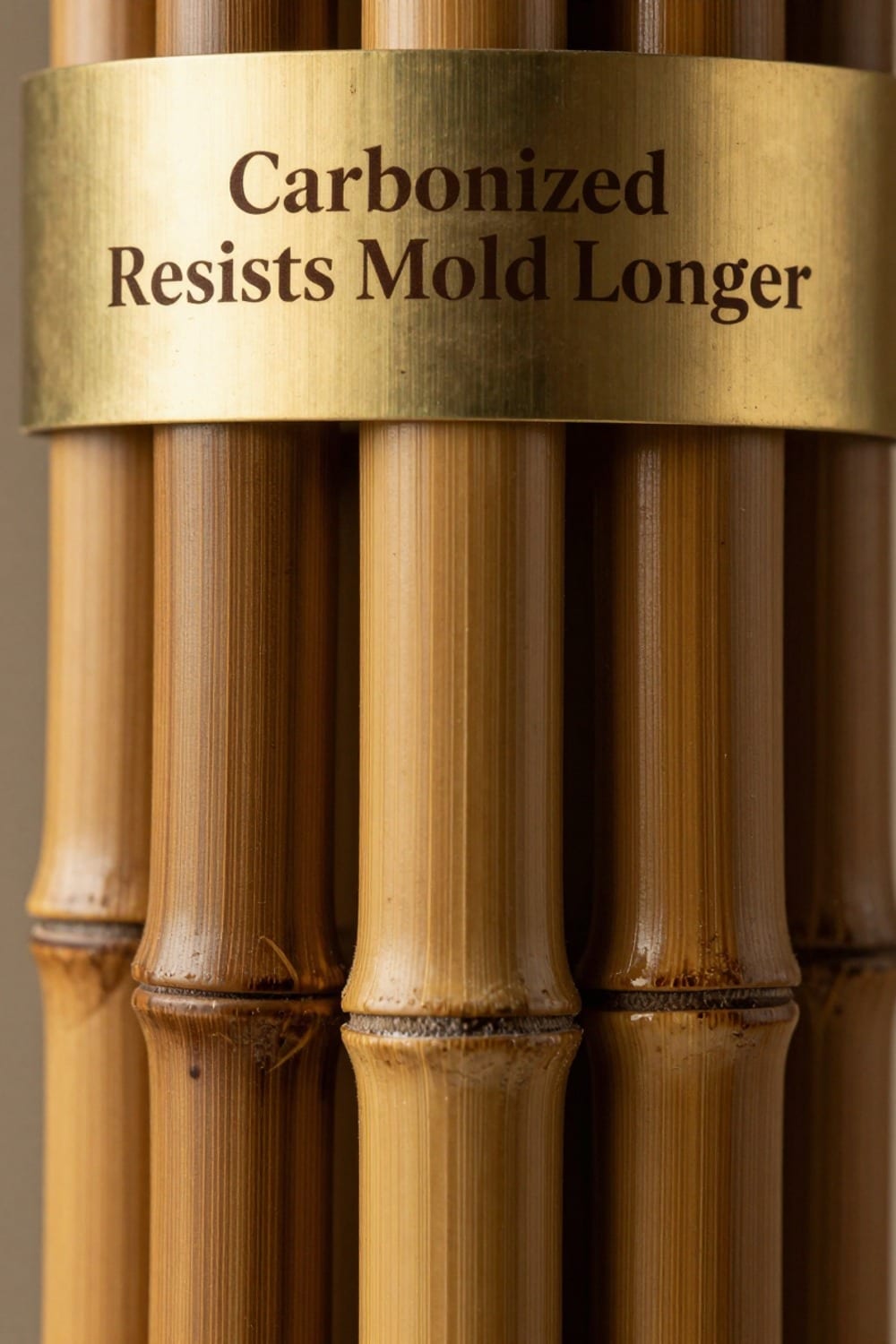
Natural bamboo, the pale honey-blonde version, is the prettier option in a listing photo. It's also untreated, and the natural sugars still inside the cane are effectively food for mold and mildew spores — which is exactly the problem on a shaded balcony or in a humid climate, where dark speckling can show up within a single damp season. Carbonized bamboo has been slow-baked at high heat before it's ever wired into a roll, a process that darkens the cane to a rich coffee-brown and changes the sugar structure inside it. The result is a cane that's meaningfully more resistant to both mold and rot outdoors, which is the whole reason it costs a little more per roll.
Sizing a Roll to Your Actual Railing
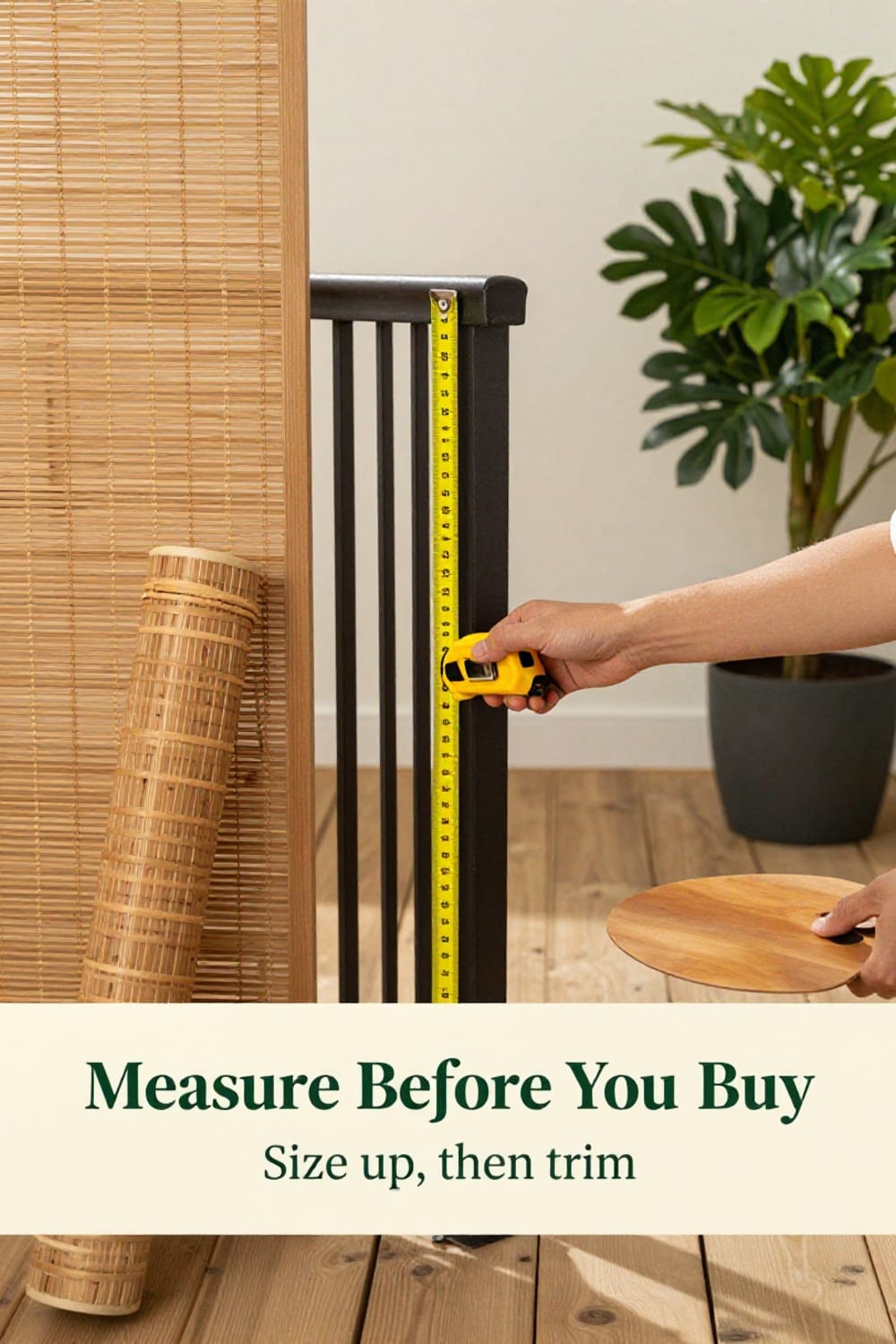
Getting a bamboo balcony privacy screen to actually fit starts with the railing, not the roll. Most apartment balcony railings run about 36 to 42 inches tall, top rail to floor, though anything from a converted rowhouse to a newer high-rise can vary a few inches either way. Measure yours before you buy anything. Bamboo rolls built for balcony screening are typically sold in 3, 4, 5, and 6-foot heights, plus a range of lengths, commonly 6, 8, and 16 feet, for width.
The rule that saves you a return: buy the next height up, never the exact match, and never short. A 4-foot roll trims down cleanly to fit a 38-inch railing with a little to spare; there's no clean way to add height to a roll that's already too short.
- Unroll it flat on the floor and measure your finished width directly against the railing span you're covering, post to post.
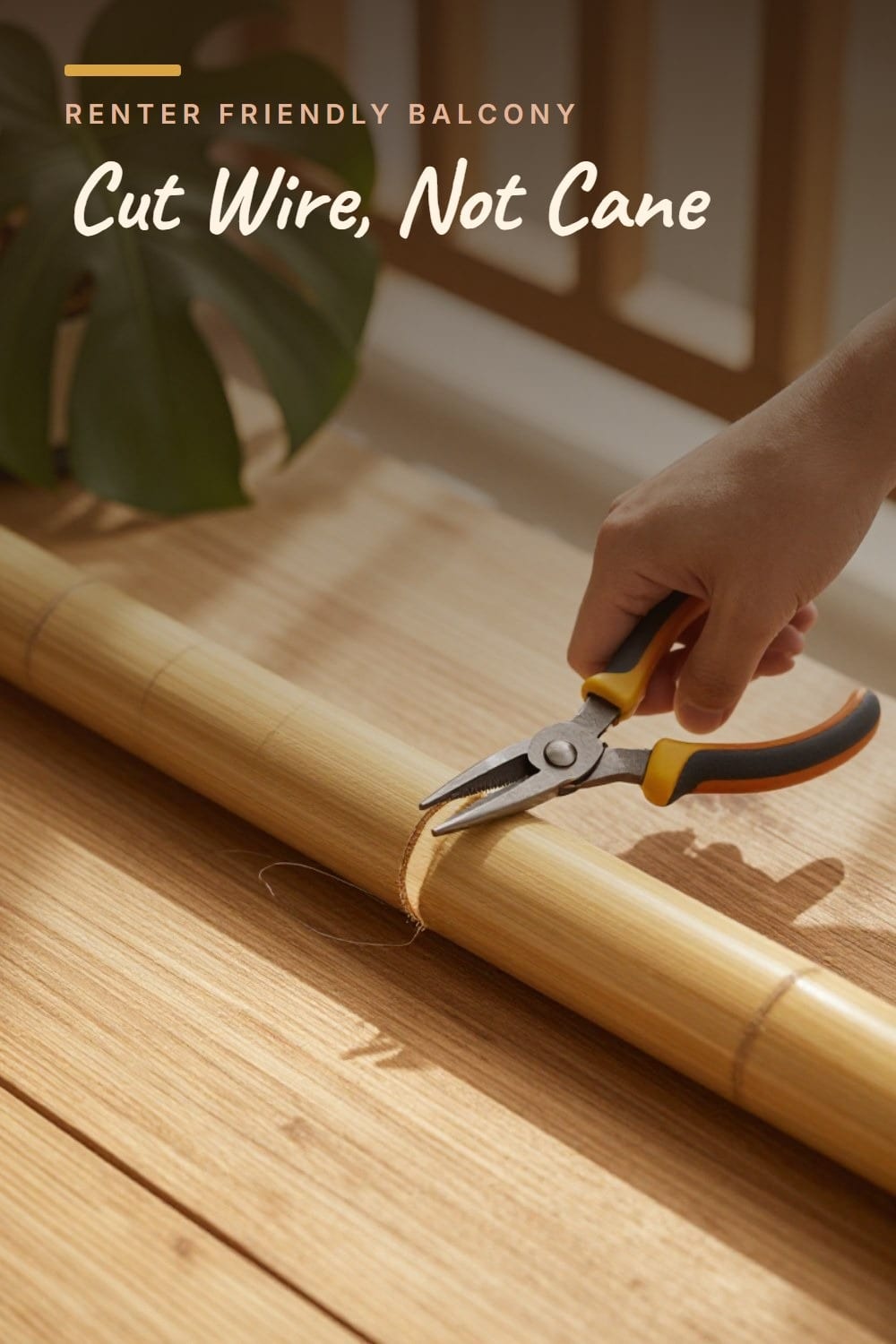
- Cut through the internal wire between two canes, not through a cane itself. Wired bamboo screening is built so each cane is a separate piece strung on wire, and cutting in the gap means you're snipping wire, not fighting through solid cane.
- The two new cut ends will have a few inches of loose wire. Re-thread it back around the last full cane on each side and twist it tight so the edge can't unravel the next time it catches wind.
- Wrapping a corner post? Leave 2 to 3 inches of overlap where the two sections meet so there's no gap at the seam.
The 20-Minute Zip-Tie Install
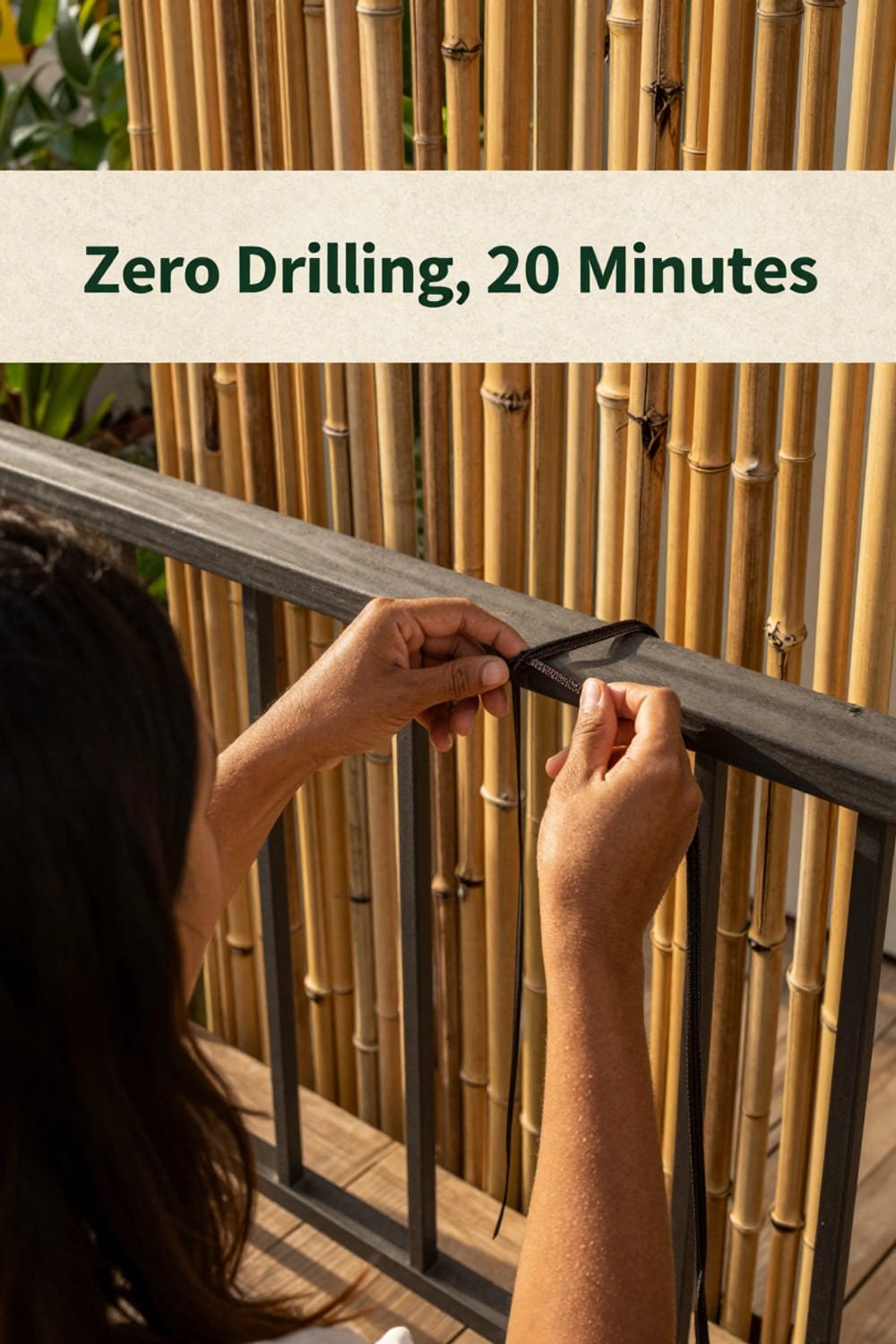
This is the entire install, and it doesn't require a single tool beyond a pair of flush-cut pliers. No drilling, no anchors, nothing that leaves a mark on a railing you don't own.
- Use UV-rated outdoor zip ties — not whatever's left in a kitchen drawer. Standard indoor nylon ties go brittle and snap within a season of real sun exposure.
- Color-match the ties to the railing, not the bamboo — black on a black metal rail, a clay or beige tone on aluminum or wood-toned rails. Matched to the rail, they read as hardware; matched to nothing, they're the first thing your eye catches.
- Thread each tie from behind the screen — around the railing bar, so the tie head lands behind the bamboo against the rail, not facing out toward the room.
- Space ties every 8 to 10 inches along both the top and bottom rail. A roll secured only at the top sags and bows within a few windy days; secured top and bottom every 8 to 10 inches, it stays flat.
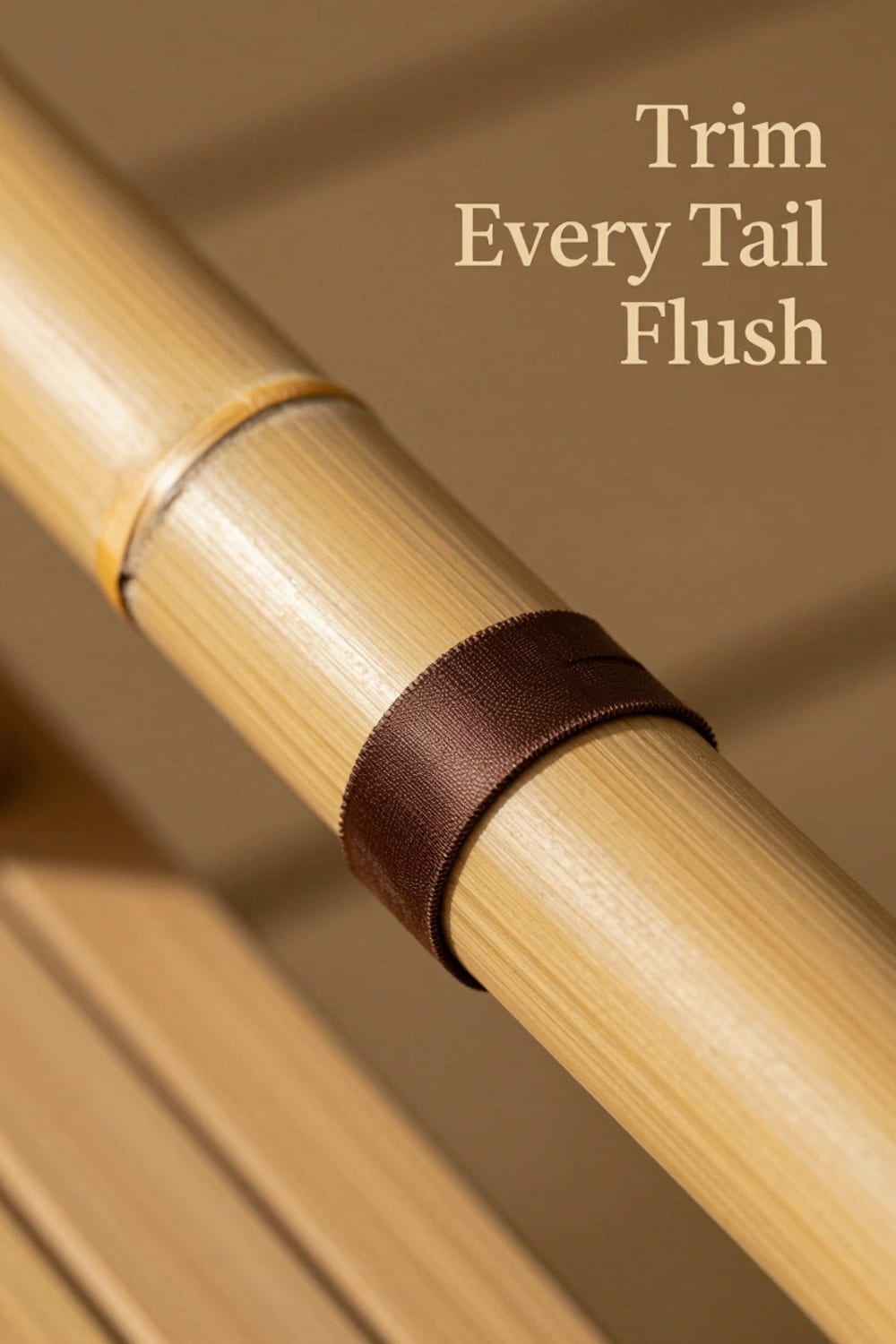
- Trim every tail flush with flush-cut pliers, not scissors. The small plastic nub scissors leave behind is the one detail that separates a finished install from a visibly DIY one.
Wind Actually Works With Bamboo, Not Against It
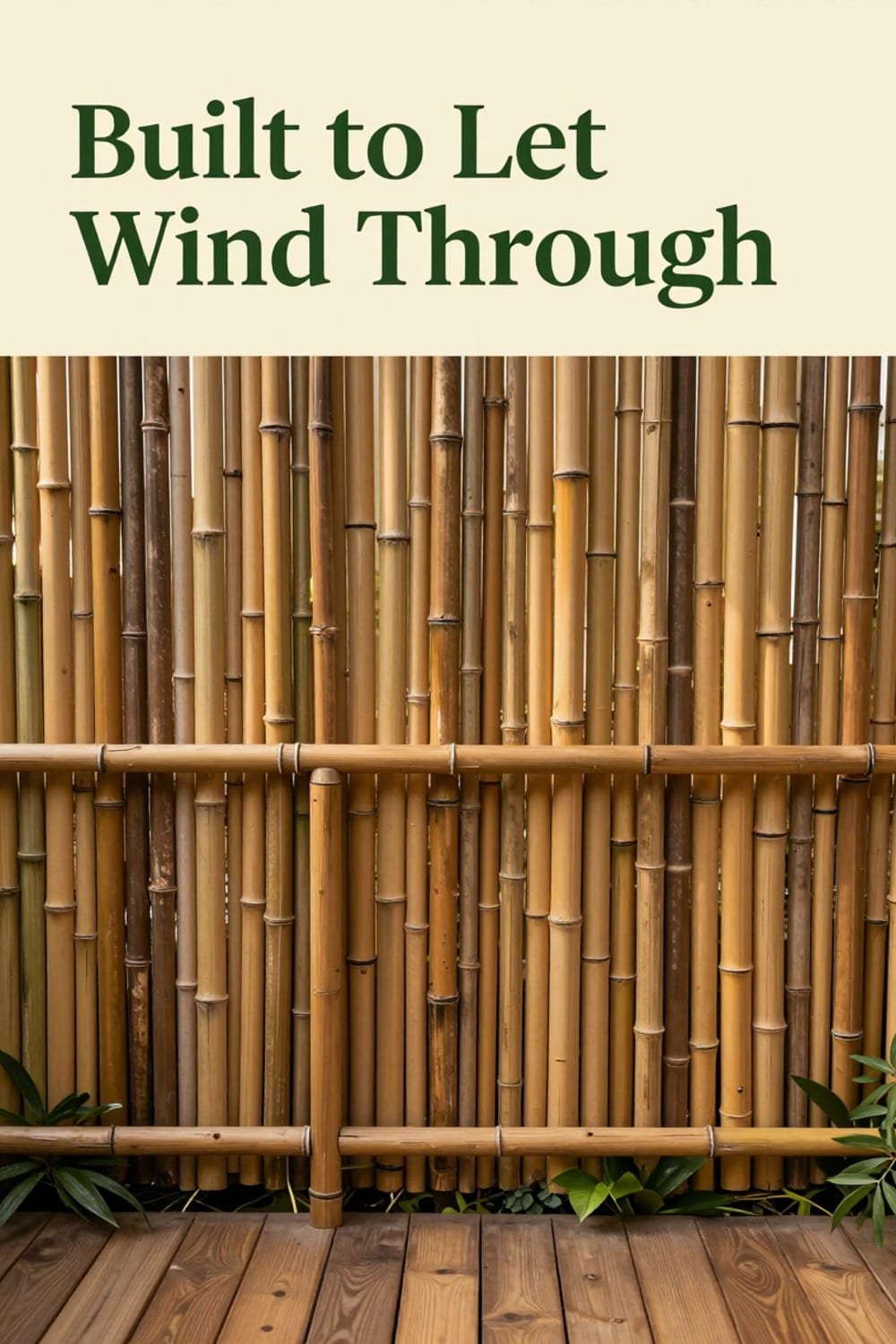
This is the real argument for bamboo over a solid privacy panel on any balcony that catches real wind: a high floor, a corner unit, anywhere near open water. A solid surface, whether it's an acrylic panel or a fully dense faux hedge, behaves like a sail. Wind has nowhere to go but push the entire panel outward, loading every tie at once.
A bamboo weave has small, even gaps built into the material by design. Gusts bleed straight through those gaps instead of slamming into a flat surface, which is a real structural advantage, not just a side effect of a cheaper material. If your balcony deals with more than the occasional breeze, our windproof balcony privacy guide goes deeper into wind load by material. Bamboo consistently holds up better than solid panels for exactly this reason.
It's also why you'll see bamboo still holding up on balconies where a flat acrylic panel has already cracked its mounting hardware or torn loose entirely. The weave isn't a compromise you make for the sake of privacy — on a windy balcony, it's the better-engineered choice, not just the more affordable one.
One Coat of Sealant a Year Buys You Several More Seasons
A clear, outdoor-rated waterproof sealant, sprayed on both sides of the screen once a year, is the easiest thing you can do to stretch a bamboo screen's life. Spring is the best window: after winter damp has fully dried out, before the hardest summer sun starts working on the surface.
The sealant does two jobs at once. It seals the cut ends where moisture gets in first, and it adds a light UV buffer that slows the fade toward grey. A can runs somewhere around $10 to $15 and covers several rolls' worth of screening, which makes this one of the cheapest maintenance habits on this whole list.
Check the Lease Before You Tie the First Knot
Zip ties leave zero holes and take thirty seconds to remove, but some leases specifically restrict anything attached to a railing or visible from the street or courtyard, regardless of whether it's temporary. It's worth two minutes before you buy anything: a short message to whoever manages the property, explaining that you're planning to attach a bamboo privacy screen to the balcony railing with zip ties, no drilling, fully removable, gets you a written yes you can point back to later if it ever comes up.
Move-Out Is a Five-Minute Job
This is the other reason the zip-tie method matters more than it seems to at install time. Snip the bottom row of ties first, so the screen's weight isn't pulling against the top row while you work, then move up. Bamboo wants to roll back into the shape it shipped in — coil it the same direction it came off the truck and it stores flat, ready to move with you to the next place.
If a season or two of natural graying bothers you more than you expected — some direct-sun balconies weather faster than others — a faux hedge panel is the year-round alternative that never ages at all, worth a look if your railing gets brutal all-day sun. And if you're planning more than just the screen, bamboo is usually the first thing we install when we're putting together a full fall balcony makeover. It's the privacy backbone everything else, the lighting, the textiles, the seating, gets layered onto after.
The short list that actually builds a mold-resistant, wind-smart bamboo screen. No ASINs guessed, no prices listed here.
| Product | Best for | Why we like it |
|---|---|---|
| Bamboo Reed Roll Privacy Screen A dense, wired roll is what gives the resort look and the sightline block that thin plastic mesh can't match. | The main screening layer along most of the railing | A dense, wired roll is what gives the resort look and the sightline block that thin plastic mesh can't match. |
| Carbonized Bamboo Fence Panel Heat-treated canes resist mold and rot far longer outdoors than untreated natural bamboo. | Shaded balconies or humid climates where mold is the real risk | Heat-treated canes resist mold and rot far longer outdoors than untreated natural bamboo. |
| Heavy-Duty UV-Resistant Zip Ties Rated for outdoor UV exposure so they don't go brittle and snap after one summer, unlike standard indoor ties. | Attaching any roll to a railing with zero drilling | Rated for outdoor UV exposure so they don't go brittle and snap after one summer, unlike standard indoor ties. |
| Clear Outdoor Waterproof Sealant Spray One light coat in spring buys several more seasons before the canes start fading toward grey. | The once-a-year coat that seals cut ends and slows fading | One light coat in spring buys several more seasons before the canes start fading toward grey. |
| Flush-Cut Pliers The one small tool that separates a finished-looking install from an obviously DIY one. | Trimming zip tie tails flush instead of leaving a nub | The one small tool that separates a finished-looking install from an obviously DIY one. |
| Outdoor Hook-and-Loop Cable Straps Reusable straps hold as firmly as a zip tie without needing to be cut off every time you want to adjust the screen. | Sections you'll want to reposition or pull down more than once a season | Reusable straps hold as firmly as a zip tie without needing to be cut off every time you want to adjust the screen. |
FAQ
Frequently asked questions
Does bamboo balcony screening actually block a sightline, or just soften it?
How long does a bamboo privacy screen actually last outside?
Will zip ties damage my railing or void my lease?
What's the real difference between bamboo and reed screening?
Can bamboo screening handle a windy or high-floor balcony?
Maeve Sinclair
Founder & Editor
Maeve is a renter-turned-balcony-obsessive in Asheville who spent years making tiny outdoor spaces feel like boutique escapes — no drilling, no big budget. She started Amber Nook to share the exact, doable formulas.
Amber Nook is a participant in the Amazon Services LLC Associates Program, an affiliate advertising program designed to provide a means for sites to earn advertising fees by advertising and linking to Amazon.com. As an Amazon Associate we earn from qualifying purchases. This means if you click a link and buy something, we may receive a small commission at no additional cost to you. We only recommend products we genuinely believe are useful.
keep reading
You might also love
Interlocking faux boxwood panels give a rented balcony year-round privacy with zero watering and zero drilling — if you attach them so wind can't take them out. Here's how to hang it, wind-proof it, and keep it from looking like the cheap version.
Wind-Proof Balcony Privacy: What Actually Survives a High-RiseThe ranked list of what actually survives high-rise wind — slatted screens, tied-down mesh, and the ground-floor advice that quietly fails you by the eighth floor.
Cozy Fall Balcony Ideas for Apartments: 15 Ways to Warm Up a Small Space15 renter-safe ways to turn a small apartment balcony into a warm, blanket-weather retreat this fall — no drilling, no deposit risk.